Mobile Auto Electrician Derbyshire, Staffordshire & Cheshire
Electrical fault finding and wiring work carried out at your own address, anywhere between the High Peak and the M6. We work across Buxton, Macclesfield, Congleton, Sandbach, Crewe, Stoke-on-Trent, Stafford, Derby and the villages in between, bringing the diagnostic kit to the vehicle instead of asking you to risk a journey. Anything that needs longer under cover can be booked in with us.
What A Mobile Auto Electrician Actually Does
Auto electrics is the side of vehicle repair that a lot of garages are glad to see the back of. It is rarely a parts job. There is rarely a component you can point at from the driver’s seat, symptoms come and go, and one complaint — a flat battery, a warning light, a window that has stopped going up — can have half a dozen unrelated causes. What the work needs is a multimeter, the wiring diagram for that exact vehicle, a scan tool that reads live data rather than only stored codes, and the discipline to follow a circuit in order. All of that fits in a van, which is why electrical diagnosis is one of the few jobs genuinely better done where the vehicle normally sits than on a ramp twenty miles away.
Our patch runs across Derbyshire, Staffordshire and Cheshire, and the three counties present noticeably different faults. In the High Peak the dominant factors are cold, gradient and gritting salt. Along the M6 corridor through Sandbach, Stafford and Crewe it is sustained motorway work, with charging systems and smart-charge control under constant load. Across the Potteries and Derby it is dense urban stop-start driving, start-stop systems cycling endlessly, and working vans carrying accessory loads fitted by whoever was cheapest at the time. The method of diagnosis does not change from one to the other; what changes is what a sensible person looks at first.
The three families of electrical fault
Almost everything divides into three. Supply and charging faults concern whether the vehicle is getting and keeping the electricity it needs: battery condition, starter current draw, what the alternator is truly delivering at the terminals, and whether the battery management system is being told the truth about what is fitted. Network and signal faults concern the data: a sensor reporting nonsense, a CANbus line with a break or a short, a module that has dropped off the bus, or a stored code that is a symptom of something three steps upstream. Physical wiring faults are the oldest category and still the most common — chafed looms, green earth points, cracked crimps, water in a connector, and the previous repair that was twisted together and wrapped in tape.
Knowing which of the three you are in changes the order of the work completely, and getting that wrong is exactly how people end up paying for three components to cure one fault. A stored code for a wheel speed sensor is as likely to be a cable chafed through near the suspension arm as a failed sensor. A battery that keeps going flat is more often a drain or an undercharging alternator than a bad battery. The first part of a visit is therefore spent establishing which family the fault belongs to, because everything after depends on it.
Mobile diagnosis, and where it stops
Most electrical work suits a mobile visit well. Fault finding, parasitic drain tracing, charging system testing, loom and earth repairs, towbar and trailer sockets, dashcam and tracker hardwiring, lighting and accessory installs all happen at your home or your workplace — and because the vehicle stays where it normally lives, a fault that only shows itself after a car has been locked up overnight can actually be caught in the act.
There is a limit, and we are straightforward about where it sits. A job needing the dashboard out, a loom lifted from under the carpet, or several dry sheltered hours to seal a repair to a standard that lasts is work to be booked in with us rather than half-attempted on a driveway in the rain. Some complaints turn out not to be electrical at all despite presenting that way, and we would rather say so than keep testing. We carry common batteries, bulbs, relays, connectors, terminals and cable, so the ordinary faults are usually finished on the first visit instead of becoming two appointments.
Electrical Work We Take On
Every one of these is done at the kerbside, on a drive, in a yard or wherever the vehicle has stopped across the three counties.
Fault Finding & Warning Lights
Live data, voltage drop testing and wiring diagrams used together to find the actual cause behind a dashboard light rather than clearing the code and waiting.
Starting, Charging & Drains
Battery condition, starter draw, alternator output and overnight current leakage all measured, so the thing that gets replaced is the thing that failed.
Wiring, Looms & Earths
Chafed-through cable, failed crimps, water-damaged multiplugs and corroded chassis earth points repaired, soldered where appropriate and sealed to keep weather out.
Towbar & Trailer Sockets
7-pin and 13-pin wiring with the correct bypass module and vehicle coding, so trailer lighting, horsebox boards and caravan fridges behave as designed.
Lighting & Beacon Wiring
Spot lamps, light bars, work lamps, beacons and marker lights run on relays with the right fuse rating and a feed that can carry the current asked of it.
Cameras & Trackers
Front, rear and interior cameras plus GPS trackers hardwired with voltage cut-off protection and tidied in behind trim rather than taped to the screen.
Electrical Work Across The Three Counties
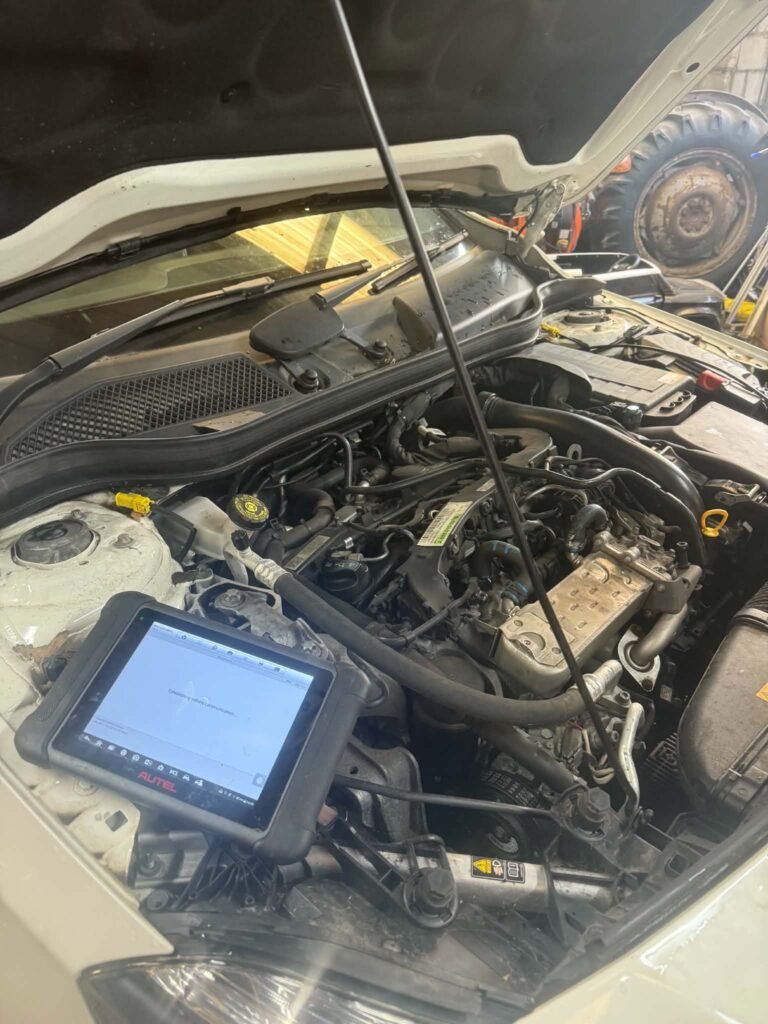
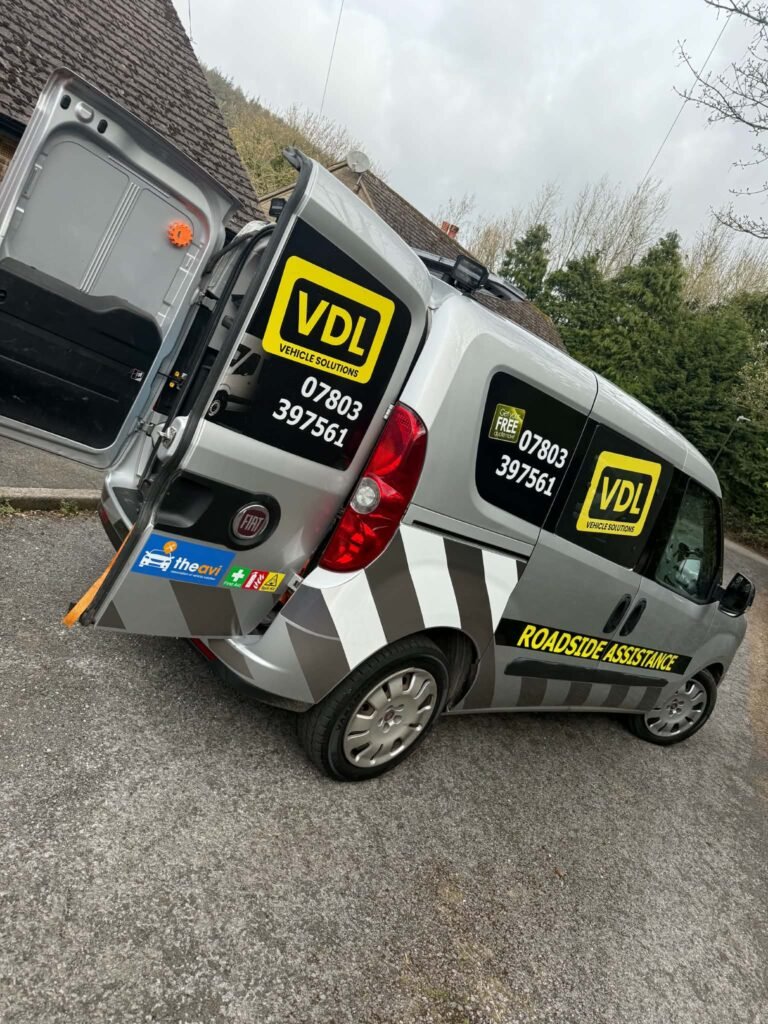
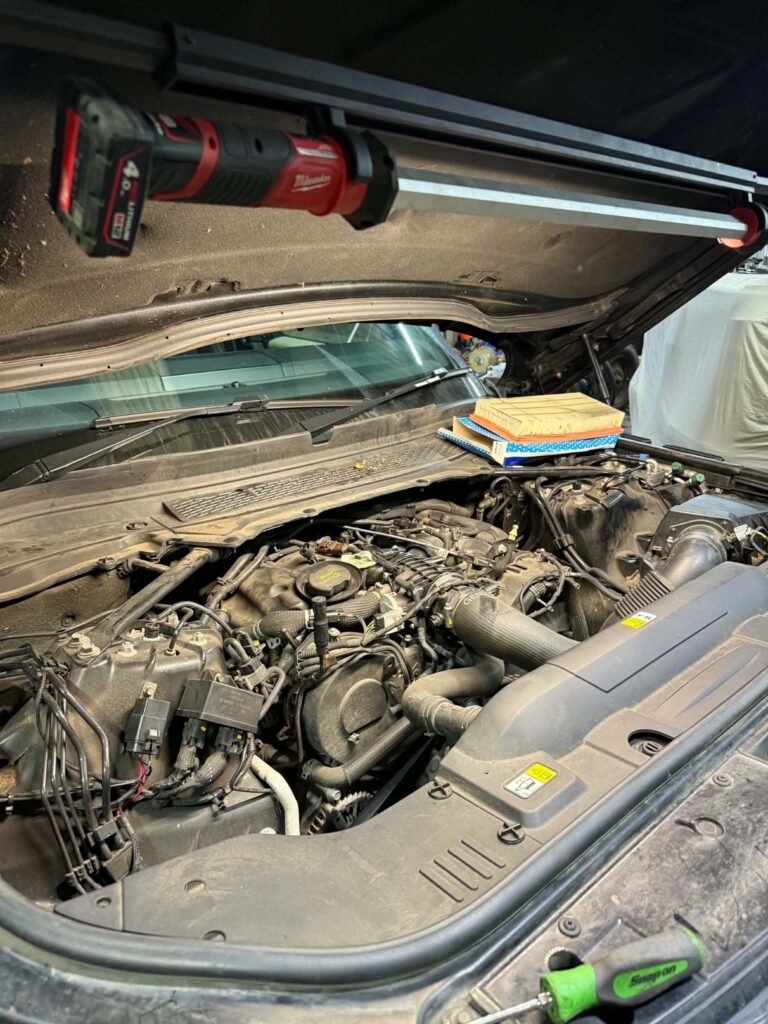
Three Counties, One Diagnostic Van
Derbyshire, Staffordshire and Cheshire are all worked as one patch, from the Peak District towns in the east through the Cheshire salt country to the M6 and the Potteries. Electrical jobs are booked the same way wherever the vehicle happens to be standing.
Questions We Get Asked
What is the difference between an auto electrician and a general mechanic?
A general mechanic works mainly on the mechanical side — brakes, belts, clutches, suspension. Auto electrical work is circuit work: measuring voltage and current, following wiring diagrams, interpreting live data and repairing cable and connectors. We do both, which matters because a surprising number of faults sit on the boundary between the two.
Will plugging in a scan tool on its own tell you what has failed?
No, and anyone who says otherwise is guessing. A scan tool reports what a module has noticed and what it is seeing right now; it cannot tell you whether a sensor is faulty or whether its wiring is broken. The tool narrows the search down to a circuit, then the meter and the diagram do the real work of finding where in that circuit the problem is.
How far across the three counties will you travel for electrical work?
The patch runs from the High Peak towns across to Derby and Ashbourne, west through Macclesfield and the Cheshire towns, and south to Stoke-on-Trent and Stafford. If you are near the edge of that it is worth a call rather than an assumption — routes and existing bookings on the day make more difference than distance on a map.
Can you work on 24V truck, trailer and plant electrics as well as cars?
Yes. Lighting, beacons, charging and wiring faults on 24V systems are all within scope, as is trailer and tipper body wiring. Tell us the vehicle and the system voltage when you call so the right test leads, connectors and cable come out with us.
Can accessories be fitted without cutting into the original wiring?
In most cases yes, and it is the right way to do it. Many vehicles have a spare fused circuit, an add-a-circuit fuse tap or a dedicated accessory feed that can be used, and a relay keeps the load off the factory wiring entirely. Cutting and splicing into an existing loom is a last resort, not a starting point.
Do I need to be with the vehicle while the diagnosis is happening?
Not usually, so long as we can get to it and have the keys. What does help enormously is a clear description before we start: when the fault happens, what else is switched on at the time, whether it is worse hot or cold, and anything recently fitted or repaired. Intermittent faults are found far faster with that information than without it.
Auto Electricians Across Our Patch
Warning Light, Flat Battery Or Dead Circuit?
Describe what the vehicle is doing and when it does it, and we will tell you whether that is a roadside diagnosis or a job to book in.