Dashcam & Tracker Fitting Derbyshire, Staffordshire & Cheshire
Front, rear and interior cameras and GPS trackers fitted at your home or your yard, anywhere from the High Peak down through the Potteries to Derby and across mid-Cheshire. Everything is hardwired to a fused feed with a low-voltage cutoff, so the camera is still working months later and the vehicle still starts on a cold Monday.
What A Proper Camera Or Tracker Install Actually Involves
Almost everything that separates a good dashcam installation from a bad one is hidden once the job is finished. A camera suckered to the glass with a lead swinging down to the lighter socket records perfectly well until the day you need it — and then the plug has worked loose, or the socket died with the ignition. A hardwired install takes power from a fused circuit chosen for the job, with the correct rating and an in-line holder, and the cable goes behind the A-pillar trim, above the headlining and down into the footwell where nothing can snag it.
The part most installs get wrong is what happens when the engine is off. Parking mode needs a permanent feed, and a permanent feed on a vehicle that stands for days is how people end up with a flat battery and a camera to blame for it. The answer is a proper low-voltage cutoff — a hardwire kit with a settable threshold, or a dedicated battery-guard module — set so the camera stops drawing long before the battery falls below what the starter needs. We choose that threshold for the vehicle and the way it is used, and on stop-start cars with AGM or EFB batteries we allow for their shorter standing margin.
Cameras, trackers and where they go
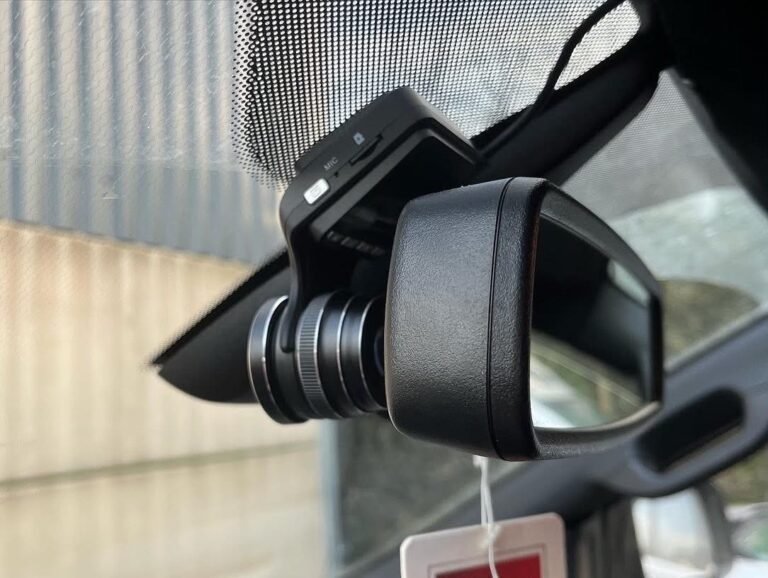
Front cameras belong high on the screen, tucked against the mirror housing where they sit inside the wiper sweep and out of the driver’s eyeline. Rear cameras are the slower half of the job: the cable passes through the tailgate grommet with the rubber reused, not drilled through, or the first winter puts water into the boot. Interior cameras suit private-hire work and any vehicle where what happened in the cab matters as much as what happened ahead of it. Vans and fleet vehicles often want three or four channels — forward, rear, nearside blind spot and load area — which is a wiring job as much as a camera job.
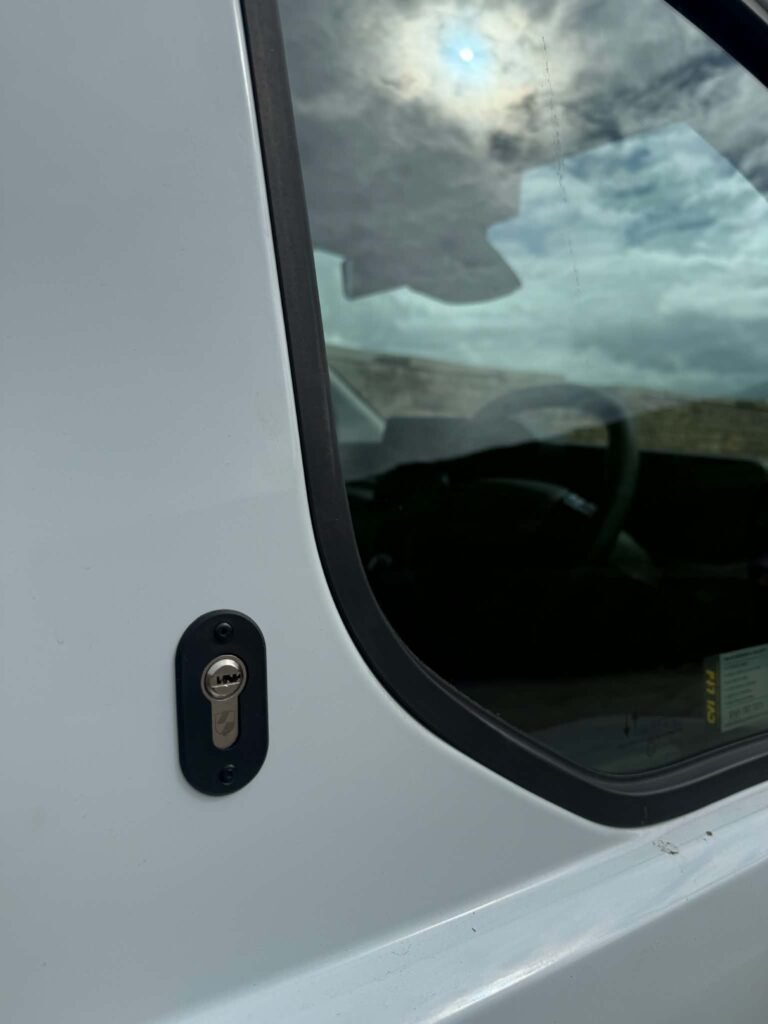
Trackers are a different discipline. The point is that whoever takes the vehicle does not find the device, so siting matters more than the hardware: away from the obvious spots under the dash, away from metal that kills the signal, and with no fresh loom on show to anyone who opens a door and looks. We fit self-contained units where there is no sensible permanent supply, and on vans we combine a tracker with the deadlock work covered under accessories fitting.
Footage, SD cards and what insurers ask for
An SD card is a consumable, not a fit-and-forget part. Dashcams loop-record, so every card is being overwritten continuously, and one that was fine in March can be quietly failing by autumn. Use a high-endurance card rated for continuous video and reformat it in the camera every few months. We show you how to lock a clip and get it off the card before we leave, because the worst time to learn the menus is at a roadside with somebody who has a different version of events.
What a claims handler actually wants is less about resolution than people expect: continuous footage with a correct time and date stamp, enough of the run-up to show who did what, and a frame where a plate can be read. So we set the clock, check the framing on screen with the vehicle on your own drive, and put the horizon where it belongs. A camera aimed slightly too low records a fine view of your wipers and nothing of the vehicle that pulled across you.
What We Fit And How
This page now covers everything we previously split between vehicle security and dashcams — cameras and trackers are one job, done at your address or your depot.
Front, Rear & Interior Cameras
Single units or full front-and-rear pairs, sited inside the wiper sweep and out of your view, with the rear cable taken through existing grommets rather than fresh holes.
Hardwiring & Voltage Protection
Power taken from a correctly fused feed with an in-line holder, and a low-voltage cutoff set to the vehicle so parking mode can never drag the battery down to nothing.
Parking Mode & Battery Care
Buffered or voltage-triggered parking modes configured around how long the vehicle really stands, including stop-start cars with AGM batteries and their thinner margins.
Van & Fleet Multi-Camera
Three and four channel installs with blind-spot and load-area views, wired to a consistent spec across a fleet so every driver finds the same thing in the same place.
GPS Trackers, Discreetly Fitted
Hardwired and self-contained trackers placed where a thief will not think to look, with no giveaway wiring and no fresh loom on show behind a trim panel.
Footage, Cards & Set-Up
Clock and date set, framing checked on screen, endurance card fitted and formatted, and a walk through locking and saving a clip before we pack up.
Cameras And Trackers On Our Patch

Where We Fit Cameras And Trackers
We work right across the three counties, from the Peak District towns down through Stoke-on-Trent and Stafford to Derby, and out over mid-Cheshire. Camera and tracker work is booked the same way wherever you are on that patch.
Questions We Get Asked
What is the real advantage of hardwiring over the lighter socket?
Three things: the camera cannot be unplugged or knocked out, there is no cable hanging across the dash to catch on a knee, and parking mode becomes possible because the feed stays live with the ignition off. It also means the install can be given its own fuse rather than sharing a circuit with something that matters.
How long does a front and rear camera install usually take?
A front-only hardwire is normally well under two hours. Adding a rear camera roughly doubles it, because the cable has to be taken the length of the vehicle behind trim and through the tailgate grommet, and on some estates and SUVs that panel work is slow and fiddly. Multi-channel van installs are a half-day job.
Which SD card should I actually buy for a dashcam?
A high-endurance card from a known brand, sized to the camera’s limit rather than the biggest you can find. Standard cards are built for occasional photographs, not for being written over continuously all day, and they tend to fail quietly — the camera looks like it is recording and the files turn out to be unreadable. Reformat in the camera every couple of months.
Will a tracker still work if the thief disconnects the battery?
It depends entirely on the unit. A hardwired tracker with no internal backup goes silent the moment it loses power, which is why many have a small backup cell, and a self-contained battery-powered unit is independent of the vehicle altogether. We will explain honestly what the device you have chosen can and cannot do rather than letting you assume it is unbeatable.
Can several cameras run from one hardwire kit?
Usually yes, within limits. Most two-channel systems power the rear camera through the front unit, so there is still only one feed to take. Genuine three and four channel systems draw more and sometimes want their own supply, and that is where the fuse choice and the cutoff threshold need thinking about rather than copying what worked on the last vehicle.
Does fitting a camera or tracker affect the vehicle’s warranty?
Not if it is done properly. A fused feed taken from a designated point, no cut factory wiring and no splices into safety circuits leaves nothing for a dealer to object to. The installs that cause arguments are the ones using scotch locks on a CANbus wire or stealing power from an airbag or module circuit, which we do not do.
Dashcam And Tracker Fitting Near You
Want A Camera Or Tracker Fitting Properly?
Tell us the vehicle and what you want covering, and we will say what the install involves before anybody commits to anything.