Vehicle Lighting Upgrades Across Derbyshire, Staffordshire & Cheshire
Vehicle lighting fitted and wired across Derbyshire, Staffordshire and Cheshire — from headlight upgrades for drivers who spend their winters on the A537 and the A515, through to light bars, spot lamps, beacons, marker lights and load-area lighting on farm and trade vehicles. We come to the vehicle, wire everything on relays with its own fusing, and tell you plainly what is road-legal before anything is drilled or cut into.
Lighting For Roads With No Street Lights
Much of this patch has no street lighting at all. The A537 across the moors, the A515 over the limestone plateau, the B6102 above Whaley Bridge and the lanes between Audlem and Wrenbury are unlit and edged with stone walls rather than kerbs. From November to February a great deal of local driving happens in full dark, where dipped beam is the only thing standing between you and a sheep, a tractor easing out of a gateway, or an unseen pothole.
That is the practical case for better lighting, and it is why most of this work goes onto working vehicles: pickups and 4x4s on farm tracks around Kniveton, tippers and vans running off the A500 and the A50, and horsebox tow vehicles leaving Stapeley at six in the morning. The point is not brightness for its own sake but seeing far enough ahead at sixty on an unlit A-road to react, and being able to work at the back of a vehicle in a dark yard without a torch between your teeth.
Why a straight bulb swap often disappoints
The commonest disappointment is an LED bulb pushed into a reflector housing designed around a halogen filament. A headlamp is an optical system — the reflector or projector is shaped around the exact position of the light source, and once that source moves the beam pattern falls apart. The result is light scattered into hedges and oncoming eyes, a soft cut-off and less usable distance than the halogen it replaced. Whiter is not brighter, and a photograph of a garage wall tells you nothing about how far you can see.
What does make a measurable difference: the correct type of bulb for the housing the vehicle genuinely has, replacing lenses gone yellow and hazy so the light can get out, correcting the aim rather than where a previous owner left it, and adding separate driving or spot lamps for the roads that justify them. On older vehicles, improving the headlamp feed so the bulbs see proper voltage at the connector often gains more than any bulb ever will.
Light bars, work lamps and beacons
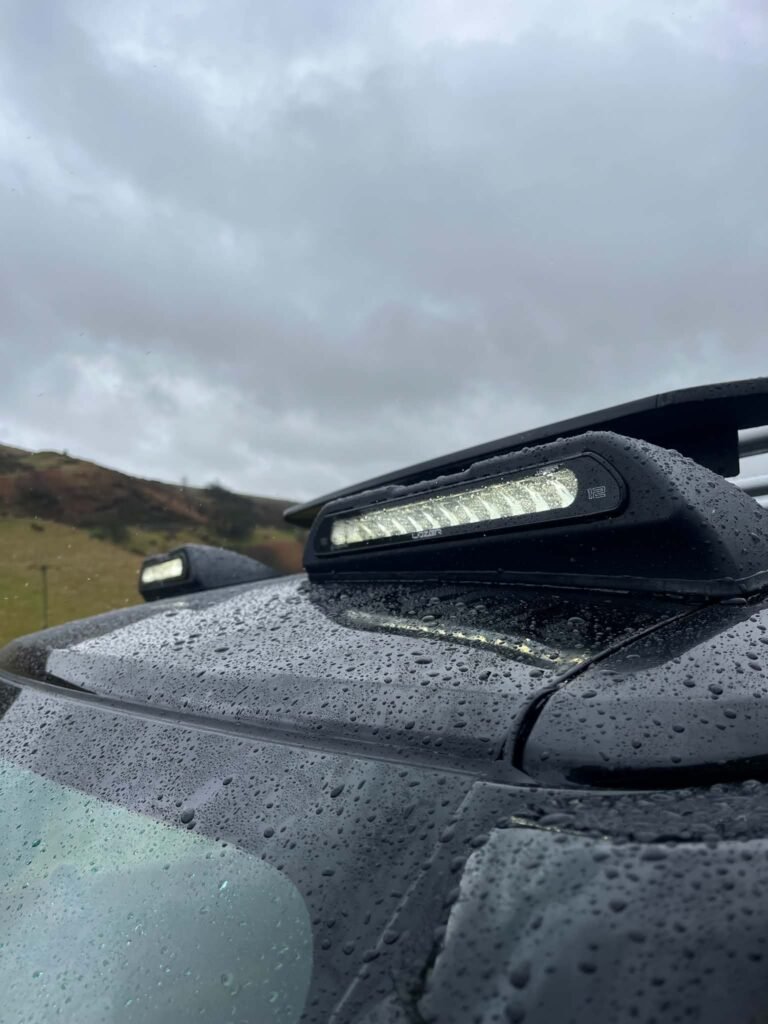
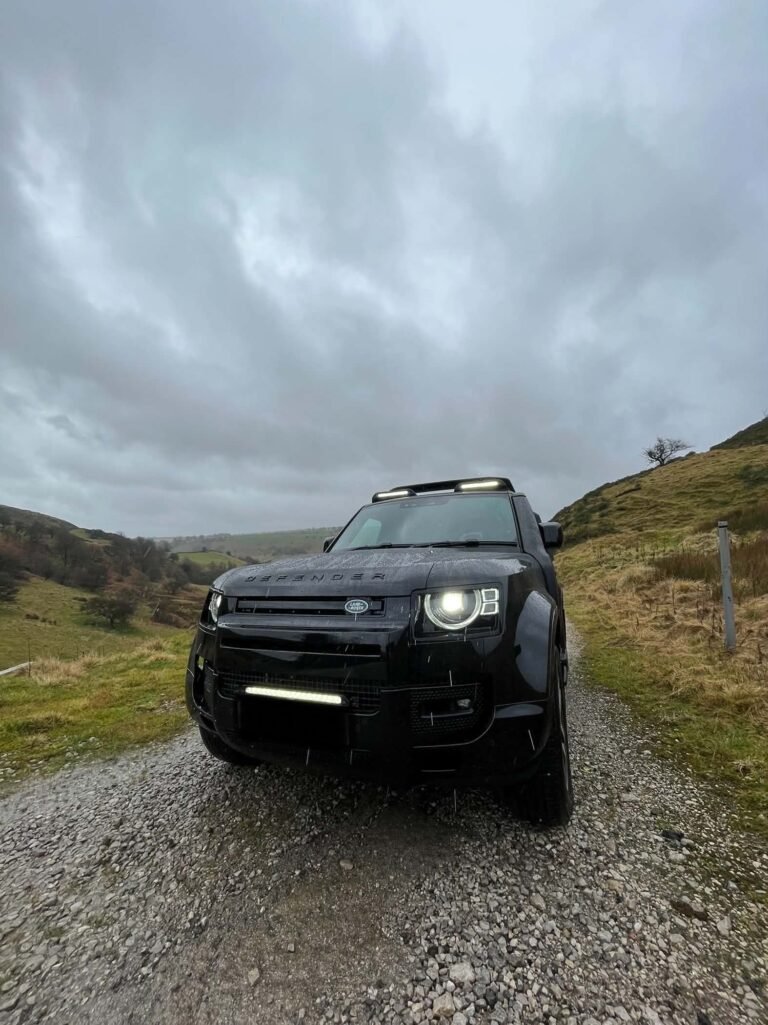
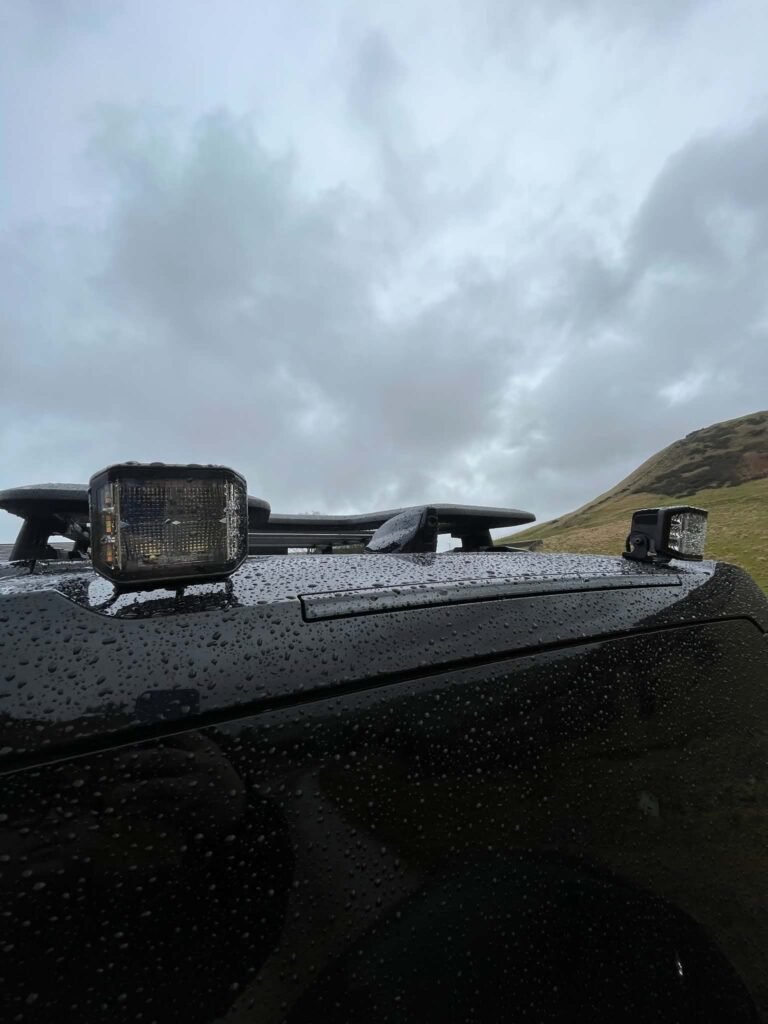
Forward-facing lamps are chosen by beam pattern, not by size. A pencil or spot beam throws a long way and suits open moorland; a flood or spread beam fills in verges and gateways for finding a farm entrance in the dark. Mounting matters just as much: a roof bar clears bonnet glare but collects wind noise and vibration, while a bumper or grille position stays quieter and is easier to aim. Rear work lamps belong on their own switch, clear of the reversing circuit, so they stay lit while you unload instead of dying the instant a forward gear is selected.
The wiring is always the same. A dedicated feed from the battery, fused within a few inches of where it is taken, cable sized for the current the lamp genuinely draws, and a relay so the switch carries only a trigger signal instead of the full load. Bulkhead holes get proper grommets, looms are routed clear of anything hot or moving, connectors face downwards so water drains, and switches go where your hand already is rather than across the dash.
The legal side, said plainly
Auxiliary driving lamps must be wired to work with main beam and extinguish when you dip, and spot and work lamps are not for road use at all — many light bars are sold as off-road only, and that is exactly what they are. Parts should be E-marked, there are limits on how many lamps you may carry and where they sit, and amber beacons belong only to the vehicles permitted one. Headlamp aim is an MOT item, and most dazzle complaints are alignment rather than output. We say which is which before fitting, and give off-road-only lamps their own clearly identified switch.
From One Bulb To A Full Rig
All of it fitted at your home, your farm or your yard, with the wiring done once and done properly.
Headlight & Bulb Upgrades
LED, HID and uprated halogen options assessed against the housing your vehicle actually has, so you gain distance on the road rather than just a colder colour.
Light Bars & Spot Lamps
Roof, grille and bumper mounted lamps chosen by beam pattern for the roads you drive, mounted to survive vibration and aimed so they throw where you need them.
Work Lamps, Beacons & Markers
Rear and side work lighting, amber beacons and marker lights for tippers, pickups and plant, switched independently of the reversing and brake circuits.
Relay Wiring & Correct Fusing
Dedicated battery feeds, fuses at the source, cable sized to the load and sealed connectors — never a scotch lock into whichever wire happened to be nearest.
Reversing Lamps & Load Area
Extra reversing lights, interior and load-bay lighting on vans and horseboxes so loading in the dark stops being a one-handed job with a phone torch.
Alignment & Road-Legal Checks
Beam alignment set after any lighting change, plus an honest view on what will pass an MOT and what is off-road use only, given before the work starts.
Lighting On Vehicles That Work For A Living
Where We Fit Lighting
Lighting work is booked the same way right across the three counties, from the High Peak villages down through Cheshire and into the Staffordshire towns. Farms, yards and business addresses are all fine, and vans and plant are as welcome as cars.
Questions We Get Asked
Will swapping to LED bulbs make my existing headlights brighter, or only whiter?
It depends entirely on the housing. In a projector unit designed for a compact source an LED can work well; in an older reflector built around a halogen filament it usually scatters light instead of throwing it, so the road ahead gets no further away while oncoming drivers get more glare. We will look at what your vehicle has and say honestly whether the change is worth paying for.
Can extra driving lamps be wired so they switch off with main beam?
That is the only correct way to wire them. Auxiliary driving lamps are fed through a relay that is triggered by the main beam circuit, so they come on with main beam and go out the moment you dip for oncoming traffic. We wire them that way as standard and add an independent isolating switch so they can be left off completely when you do not want them.
How do you stop upgraded lighting from dazzling oncoming drivers?
Mostly by aiming it. After any change to the headlamps we reset the vertical and horizontal aim so the cut-off sits where it should, and anything fitted above bumper height gets set up to drop its hot spot onto the road rather than into windscreens. Lamps that cannot be made acceptable on dipped beam get wired as main-beam-only or off-road-only, which is what keeps complaints and MOT problems away.
Will a roof-mounted light bar fail an MOT?
Not in itself, but it must not be usable on the road, and it must not obscure your view or the required lamps. The usual arrangement is to wire the bar as off-road use only on its own clearly identified switch, with the main lighting unaffected. We will tell you before fitting how your particular setup will be viewed so there are no surprises at test time.
Am I allowed an amber beacon on a pickup I use for work?
Beacons are allowed only on certain classes of vehicle and in certain situations, so the honest answer depends on what the vehicle is and where it is being used — on a private road or a site it is a different question from a public highway. We will fit and wire one properly, usually on a bar rather than by drilling a roof, and we will be straight with you about when it is appropriate to switch it on.
The load area of my van is pitch dark in winter. What are the options?
Usually a pair of LED strips or panels in the roof of the load bay, wired on their own fused feed with a door switch or a dash switch, plus rear-facing work lamps if you are unloading outside. Keeping that lighting off the interior courtesy circuit matters, because a light left on by accident on a van that stands overnight is one of the easiest ways to arrive at a flat battery.
Other Work We Do Across The Patch
Thinking About Better Lights?
Tell us what the vehicle is and where it spends its evenings, and we will suggest something that puts light where you need it and stays legal.