Vehicle Accessory Fitting Across Derbyshire, Staffordshire & Cheshire
Towbars and trailer sockets, roof bars, parking sensors and reversing cameras, deadlocks, 12V and USB points, split-charge and dual-battery systems — fitted at your house, your farm or your yard anywhere across the three counties. Most of what we fit goes onto vehicles that tow, carry tools or work for a living, so it is wired and mounted to survive that rather than to look right on the day.
Accessories That Have To Survive A Working Week
Nearly all the accessory work in these three counties goes onto vehicles being used for something. Towbars on cars that pull a horsebox out towards Wybunbury or Audlem most weekends, roof bars and racks on vans working between the six towns of Stoke, reversing cameras on Transits that spend their days backing into Victorian entries in Macclesfield and Crewe, deadlocks on vehicles carrying tools overnight, and split-charge systems feeding fridges, inverters and leisure batteries. None of it gets an easy life, and a caravan run up the A515 will test a bad installation long before an MOT does.
That changes how things ought to be fitted. A bracket torqued by feel rather than to specification works loose; a feed taken with a piggyback fuse and a scotch lock corrodes and eventually takes a circuit with it; a camera cable pushed through a tailgate grommet with no service loop chafes through inside a winter. We fit on your drive or at your premises, use the vehicle’s own mounting points and dedicated wiring wherever they exist, and would far rather spend an extra half hour routing a cable properly than return to a fault that was built in on the day of fitting.
Towbars, sockets and what the vehicle needs to know
A 7-pin socket carries lighting only, which is all that a plant trailer, a small flatbed or a tipping trailer needs. A 13-pin socket adds the permanent live, the switched charge feed and the extra earths that a caravan or a horsebox wants for its fridge, interior lighting and leisure battery, and on most modern vehicles that charge feed is only live with the engine running. Which one suits you depends on what is going on the back, and it is a decision far better made before the socket is fitted than discovered on the first trip away.
The electrics are the part that usually goes wrong. Newer vehicles need a dedicated towing module rather than splices into the rear lamp circuits, and many then have to be coded so the car knows a trailer is connected. That coding is what switches the rear parking sensors off while towing, alters how the stability system intervenes, and stops the car’s own rear fog lamp competing with the trailer’s. Done cheaply it produces warning lights and bulb failure messages; done properly nothing on the dashboard changes at all. We also check what a towball does to existing sensor coverage and tell you about it beforehand rather than leaving you to find out in a tight yard.
Security, power and the load area
Van security is a matter of adding locks where the original design is weakest. Deadlocks and hook locks on the side and rear doors give a second, independent lock that does not rely on the central locking or the factory latch, while slam locks suit a driver who is in and out of the vehicle twenty times a day and will not reliably turn a key each time. Where the lock lands matters more than whose name is on it — fitted into thin unsupported skin it simply tears out, so it needs to sit where the door structure can carry the load.
Power in the back follows the same logic. A voltage-sensing split-charge relay is fine behind an older alternator, but a vehicle with smart charging needs a DC-DC charger to see a proper charge voltage at the second battery, and either way the cable must be sized for the length of the run and fused at both ends rather than only at one. Sockets, USB points and inverters each get their own protected feed. If ply lining or racking is going in, the moment to run cable, camera feeds and sensor wiring is before the boards go on the walls, not by drilling through them six months later.
Fitted To The Vehicle, At Your Address
Booked in advance and done where the vehicle lives, whether that is a driveway, a farmyard or a depot.
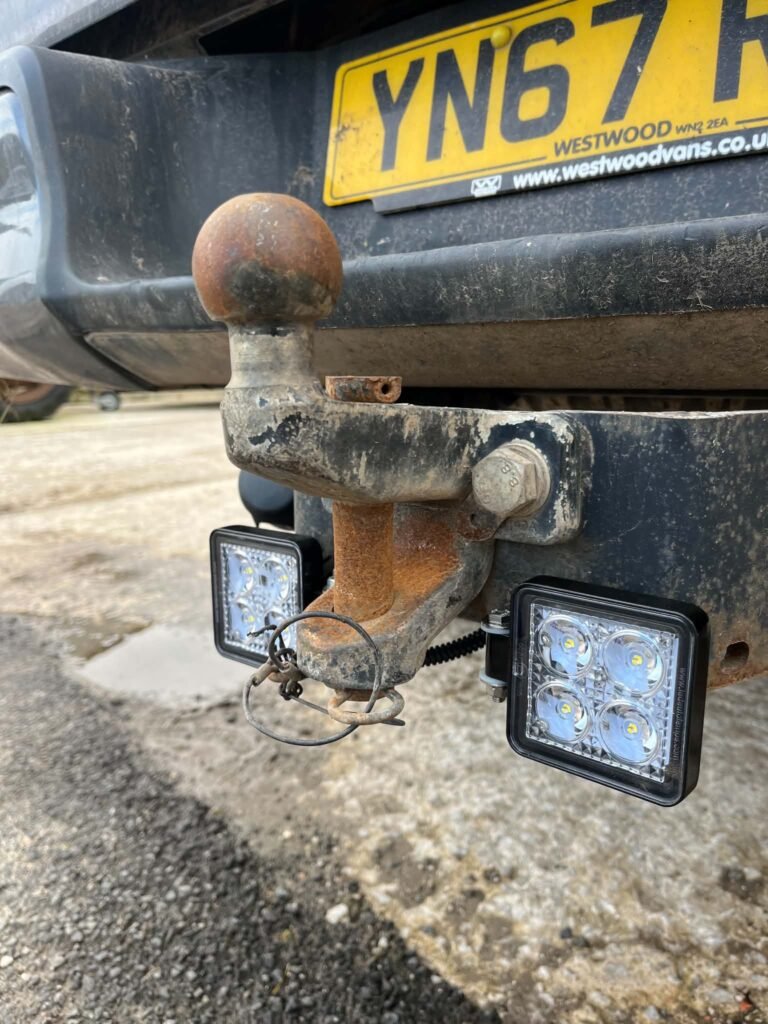
Towbars & Trailer Sockets
Flange, swan neck and detachable bars fitted to the vehicle’s own points, with 7-pin or 13-pin sockets wired through a dedicated module and coded where needed.
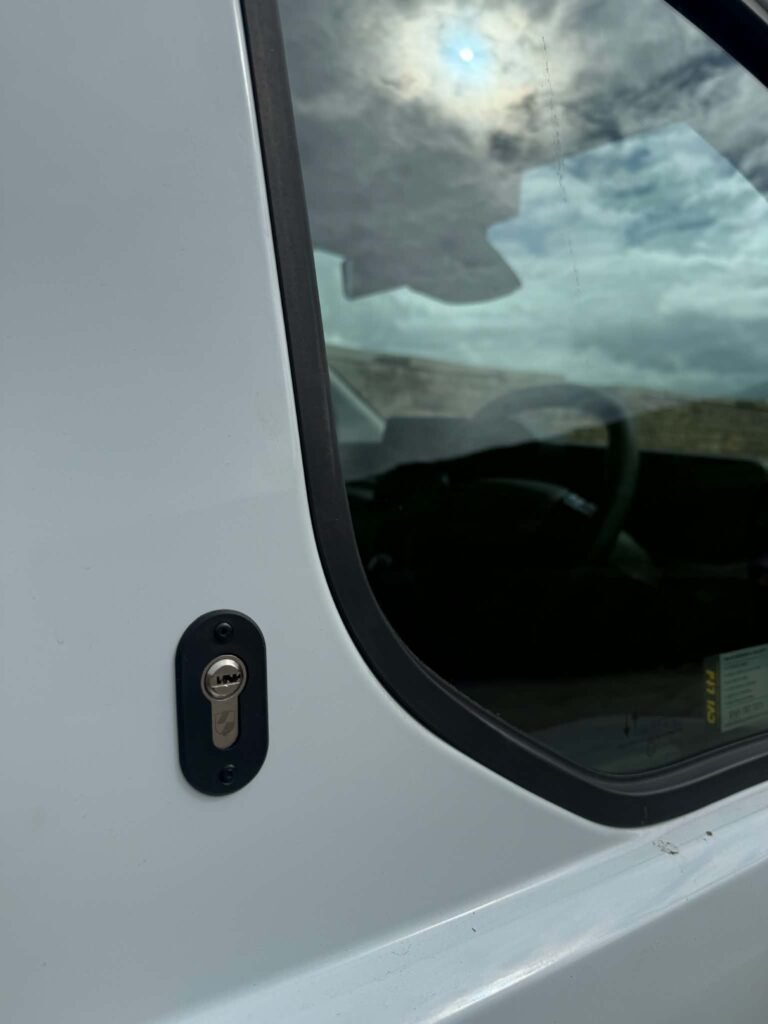
Deadlocks & Van Security
Deadlocks, hook locks and slam locks fitted into sound door structure, giving a second lock that works independently of the vehicle’s own central locking.
Parking Sensors & Cameras
Front and rear sensors and reversing cameras sited to suit the vehicle, with cables run through existing grommets and a service loop at every hinge.
Split-Charge & Second Battery
Voltage-sensing relays or DC-DC chargers to suit the alternator, with correctly sized cable and fuses at both batteries so the starter battery is never at risk.
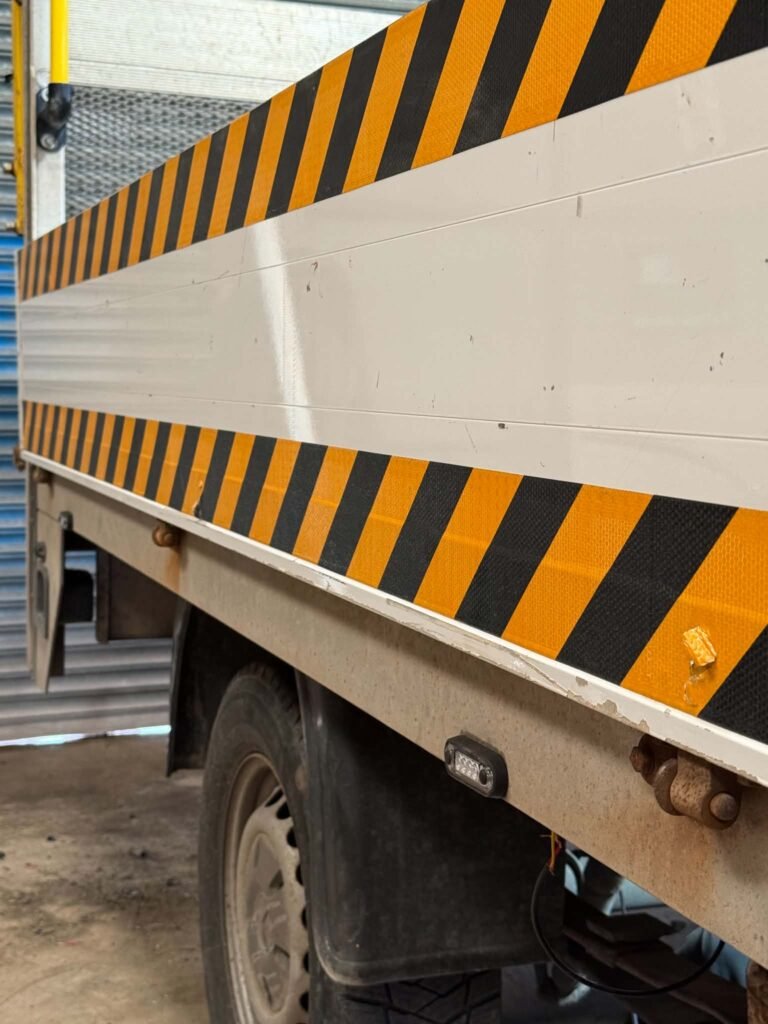
Beacons & Load Lighting
Amber beacons, marker lights and load-bay lighting mounted and switched sensibly, usually on a roof bar rather than by making holes in a good roof.
Roof Bars, Racks & 12V Power
Bars, racks and ladder carriers torqued to figure, plus 12V sockets, USB points and inverter feeds added on their own fused circuits rather than spliced in.
Towing, Security And Load Area Kit
Where We Fit Accessories
Fitting days are arranged across the whole patch, from the Peak District villages through the Cheshire plain and down into the Potteries and Stafford. Farms, equestrian yards, depots and home addresses are all equally workable for this kind of job.
Questions We Get Asked
What does coding a car for a trailer actually change?
On most vehicles built in the last fifteen years it tells the car that a trailer is present, which switches off the rear parking sensors while coupled, changes how the stability and traction systems respond to the extra weight, and prevents the vehicle’s own rear fog lamp from duplicating the trailer’s. Without it you tend to get warning messages and sensors screaming at a trailer that is supposed to be there.
Can a towbar be fitted at my home rather than at a fitting centre?
Yes, that is how we do them. The job needs level ground, enough room to work behind the vehicle and somewhere the bumper can be laid down safely, which most driveways and all yards manage comfortably. Where a vehicle is on a steep or badly broken surface we will say so when you book and arrange somewhere more suitable instead of working around it.
Will parking sensors still work once there is a towbar on the back?
A towball sits inside the rear sensor field, so unless the vehicle has towing coding or a detachable neck you can expect it to be detected as an obstacle. On a coded installation the sensors are disabled automatically while a trailer is plugged in. Where that is not possible on a particular vehicle we will explain the compromise before fitting rather than afterwards.
Is a slam lock or a deadlock the better choice for a work van?
It comes down to how the van is used. A slam lock locks the door the instant it closes, which suits multi-drop work where a key would never get turned; a deadlock adds a separate, stronger lock for a vehicle that is loaded and then left overnight. Plenty of vans end up with slam locks on the side door and deadlocks on the rear, which covers both patterns of use.
Can a second battery be charged properly from a modern smart alternator?
Not with a plain split-charge relay — a smart charging system varies its output and will often leave an auxiliary battery sitting well below a full charge. A DC-DC charger takes whatever the alternator gives it and delivers a correct charging profile to the second battery instead. It costs more than a relay and it is the difference between a leisure battery that lasts and one that is flat by the second day.
Can roof bars be fitted to a car with no rails or visible fixing points?
Usually yes. Most vehicles without rails have either fixed points hidden under trim covers or a door-aperture clamp system designed for them, and the right kit for that specific model is what makes the difference between a secure bar and a scratched roof. We check which system your vehicle takes, fit to the manufacturer’s torque figures and set the bar spacing for whatever you are actually carrying.
Our Other Services Across The Counties
Something You Want Fitting?
Send us the vehicle details and what you are planning to tow, carry or secure, and we will tell you what the job involves.