Van Tool Theft: Making Your Van A Harder Target
For a sole trader, losing a van full of tools overnight is not an inconvenience — it is the end of trading until the money is found to replace them. Here is how to make yours the van they walk past.
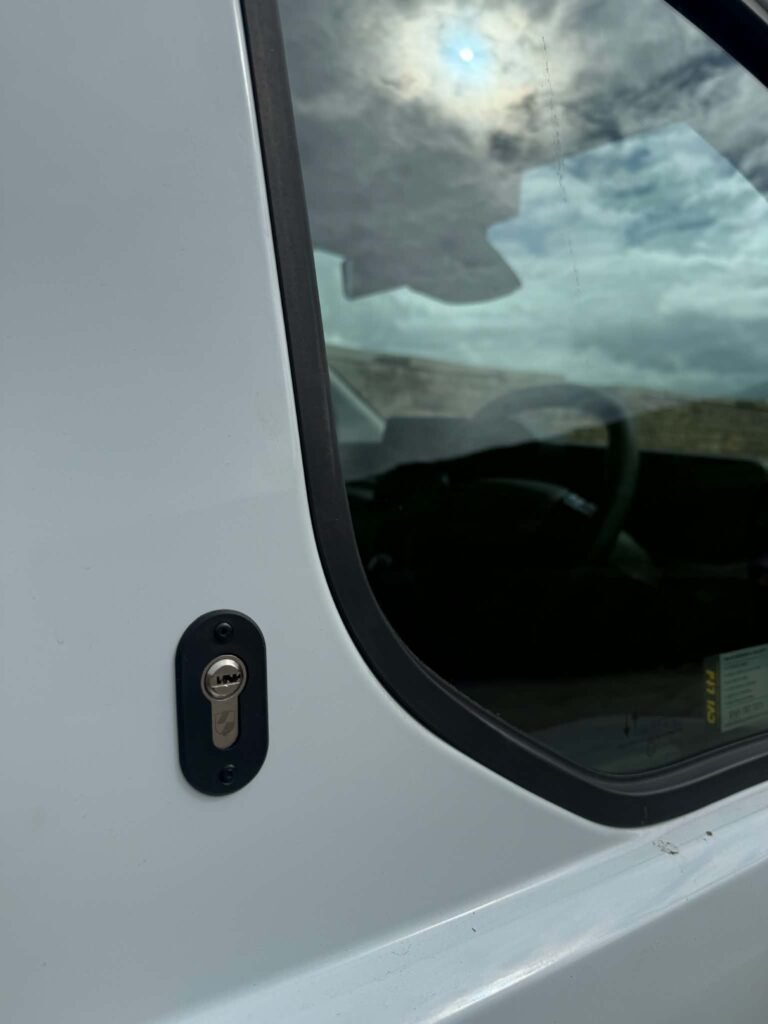
The uncomfortable truth about van break-ins is how fast they are. Nobody spends twenty minutes on your side door hoping for the best. They arrive knowing what they are doing, they are in and out in well under a minute, and they take whatever is nearest the door. The whole strategy is speed, and everything that works against them is about making the job take longer than they are willing to spend.
That is the mindset worth having. You are not trying to build a vault. You are trying to be the van that costs more effort than the one parked three doors down.
Where They Actually Attack
Knowing the weak points matters, because a lot of money gets spent protecting parts of a van nobody bothers with.
- The door skin. Peeling is now the common method on many popular vans — the outer skin near the lock is bent back with a bar until the mechanism is exposed and can be operated directly. The factory lock is never touched.
- The lock barrel itself. Older and simpler locks can be attacked with a screwdriver and enough force, or picked quickly on vans with known weaknesses.
- The nearside sliding door. Pavement side, out of sight of the house, usually the first choice.
- The rear doors near the handle. Same peeling principle, and on a lot of vans the rear doors are the least reinforced panel on the vehicle.
- The roof. Less common but it happens, particularly on high-roof vans left in yards, where a panel can be cut without anyone hearing from the street.
- The bulkhead. If the cab can be opened, a soft or missing bulkhead means the load area is open too.
Notice that most of these ignore the lock. That is why an alarm and a good key are not the answer on their own.
Layer One: Extra Locks
Additional locks are the most effective single change most people make, because they force the thief to defeat a second, separate mechanism that has nothing to do with the original lock.
Deadlocks are keyed separately and throw a solid steel bolt into the door frame. They are strong, visible from outside, and because they are locked manually they cannot be defeated by anything electronic. The downside is that you have to remember to use them, and on a day of twelve calls that is a real discipline.
Slam locks solve that problem by locking the moment the door closes. If you are in and out of the van all day — multi-drop, plumbing, servicing calls — slam locks are usually the better fit, because there is no version of the day where you forget. The trade-off is that you cannot leave a door on the latch, and you need to be organised about where the key lives.
Plenty of vans end up with both: slam locks on the door you use constantly, deadlocks on the rear doors that only open when you are loading. We fit deadlocks and van security systems at the customer’s home or yard, so the van is not off the road for a day to have it done.
Layer Two: Stop The Peeling
If peeling is the method, reinforcing the panel is the counter. Anti-peel plates and repair plates spread the load across a much larger area of the door so that bending the skin no longer gets anyone near the mechanism. They are not glamorous and they are not expensive relative to a van of tools, and on the vans that are routinely targeted they are arguably more important than another lock.
Lock shields and blanking plates over the original handle are worth considering at the same time, along with a proper steel bulkhead if the van has a mesh one or nothing at all.
Worth knowing: a van that has clearly been attacked and held is still a damaged van. Peeling bends the door skin whether the thief gets in or not, and you may well be paying for a panel repair. Security spending is about not losing the tools, not about never having a bad morning.
Layer Three: Empty It Where You Can
No lock beats an empty van. If you have a garage, a lockable shed or a secure workshop at home, moving the expensive and portable items out overnight is the single most effective habit there is — cordless tools, laser levels, diagnostic kit, anything small with a strong resale market.
For a lot of people that is genuinely impractical, and it is not worth pretending otherwise. The workable middle ground is to empty it of the high-value, easy-to-carry items and leave the bulky, awkward, hard-to-sell stuff in place. Stack the van so that anything worth having is at the bulkhead end, not by the doors, and use lockable steel drawer units or a bolted-down site box inside the load area. Every extra thing that has to be opened is more time on the clock.
Layer Four: Mark Everything
Marking tools does two things. It makes them harder to sell on, and it gives you a chance of getting them back if they are recovered. Do both of the following:
- Mark them visibly. Engrave, paint, or use a marking system on the body of the tool where a buyer will see it. A visible mark is a deterrent in a way a hidden one is not.
- Record them. Photograph each item, write down make, model and serial number, and keep that list somewhere other than in the van. Police cannot return a drill to you without evidence it is yours, and insurers will ask for exactly this list at the worst possible moment.
Doing this on a wet Sunday afternoon is tedious. Doing it retrospectively, from memory, after the van has been emptied, is far worse.
Layer Five: A Tracker On The Van Itself
Sometimes the van goes too, either because the tools are in it or because the van is the target. A GPS tracker will not stop that happening, but it changes what happens next — a live location within minutes gives police something to act on while the vehicle is still moving, rather than a description and a plate number.
Trackers are also genuinely useful day to day if you run more than one vehicle, for knowing who is where and for settling a question about what time a job started. We fit GPS trackers and camera systems as part of the same visit as locks, which saves doing the job twice.
Does Signage Help?
The honest answer is that it helps a little, and only when it is true. “No tools left in this van overnight” works on the thief who is choosing between vans, which is most of them. What does not work is a sticker announcing a security system you do not have — anyone doing this regularly can tell at a glance whether a van is actually deadlocked.
The same applies to where you park. Nose-in against a wall so the rear doors cannot be opened, sliding door against a fence or a hedge, under a light, in view of a camera if you have one. None of it costs anything and all of it moves you down the list.
The Insurance Trap
This is where people get badly caught out, and it is worth reading your policy rather than assuming. Common conditions include a cap on tool cover that is far lower than the value of what you carry, a requirement that the van is locked and alarmed, a requirement that it is parked off-road or in a locked compound overnight, and an outright exclusion on anything left in the van between certain hours.
Being outside any one of those conditions can mean a claim is reduced or refused entirely, even though the theft plainly happened. Check the overnight parking wording, check the per-item limit as well as the total, and check whether cover exists at all for tools as opposed to the van. Insurance terms vary a lot and change, so read your current documents rather than going on what a policy said three years ago.
What We Would Do First
If you are starting from a standard van with factory locks and a full load, the order that gets the most benefit for the least money is: extra locks on the doors you actually use, anti-peel reinforcement on the panels that get attacked, a proper bulkhead, then a tracker. Alongside that, mark and list the tools, and empty the van of the high-value items whenever you have somewhere to put them.
None of it makes a van theft-proof. All of it makes yours the harder target, which is the whole game.
Want Your Van Secured Properly?
We fit deadlocks, slam locks, trackers and camera systems at your home or yard, so the van stays working.
📞 Call 07803 397561 Message On WhatsApp