VDL Vehicle Solutions

Category: Servicing & Repairs

Practical advice on vehicle servicing, common repairs and keeping a car or van on the road.

  • Does Using A Mobile Mechanic Affect Your Warranty?

    📞 07803 397561 ✉️ info@vdlvehiclesolutions.co.uk 📍 Derbyshire · Staffordshire · Cheshire Emergency Call-Outs Available
    Home › Blog
    Servicing & Repairs

    Does Using A Mobile Mechanic Affect Your Warranty?

    VDL Vehicle Solutions · 19 October 2026

    It is the question we get asked more than any other, usually by someone who has been told at a dealership that they have no choice. The short answer is no — but there are conditions worth understanding properly.
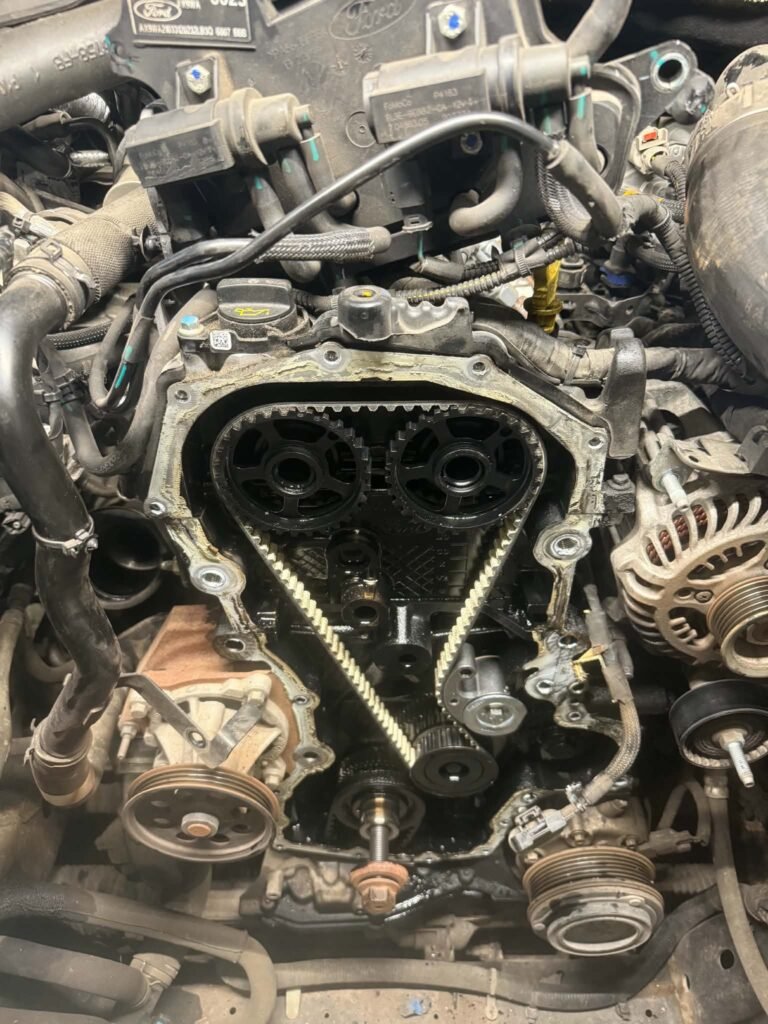
    Service record being completed after a mobile car service

    Let us deal with the main point first, because it is the one that saves people the most money. Having your car serviced by an independent garage or a mobile mechanic does not, by itself, invalidate a manufacturer’s warranty. You are not obliged to use a main dealer to keep the warranty on a new car intact.

    That is not a loophole or a clever argument. It is how the rules covering the motor trade in the UK and across Europe have worked for many years, and it exists specifically so that car owners have a real choice about who maintains their vehicle.

    Block Exemption, In Plain English

    The regulations usually referred to as Block Exemption deal with competition in the motor industry. Among other things, they mean a manufacturer cannot make its warranty conditional on servicing being carried out within its own dealer network, and cannot require that only its own branded parts are used for routine servicing.

    Translated into something useful:

    • You can have routine servicing done by any suitably qualified garage or mechanic you choose
    • Parts and fluids do not have to carry the manufacturer’s badge, but they do have to be of matching quality and correct specification
    • Independent garages are entitled to access the technical information and service schedules they need to do the work correctly
    • The manufacturer’s warranty continues to cover manufacturing defects as it always did

    What the rules do not do is remove the manufacturer’s right to refuse a claim where the fault was caused by poor maintenance, the wrong parts or the wrong fluids. That is entirely reasonable, and it is where the conditions come in.

    The Three Things That Actually Matter

    A manufacturer warranty stays intact through independent servicing as long as three things are true.

    The service follows the manufacturer’s schedule. Not a generic service, not somebody’s idea of what a car needs — the operations the manufacturer specifies, at the intervals it specifies, for that engine and that variant. Schedules differ between apparently identical cars, so the work has to be looked up rather than assumed.

    Parts and fluids meet the correct specification. This matters most with engine oil. Modern engines want a specific viscosity and, crucially, a specific manufacturer approval — the oil has to meet the standard the engine was designed around, particularly on anything with a particulate filter or extended drain intervals. A shop that fits one all-purpose oil to everything is exactly the risk the rules do not protect you from. The same goes for filters, plugs, brake fluid and coolant type.

    The work is properly recorded. This is the part most often skimped, and it is the one that decides a disputed claim.

    What “Properly Recorded” Means

    If a warranty question ever arises, the manufacturer will ask you to show that the car was maintained as required. A vague stamp is weak evidence. What stands up is a record that shows:

    • The date and the mileage at the time of the service
    • What type of service it was, and which schedule it was carried out to
    • Each operation performed, item by item, rather than “service” as a single line
    • The parts fitted, identified properly, with the part numbers or brands
    • The oil used, including its grade and the manufacturer approval it meets
    • Who carried out the work and how they can be contacted
    • Any advisories noted at the time

    Keep the itemised invoices as well as whatever goes in the service book, and keep them together with the car’s paperwork. If the car uses a digital service record, ask how your service will be recorded — some manufacturers allow independents to update the digital record, some do not, in which case documented paper evidence is what you rely on. Either way it is worth asking the question before the work rather than after.

    Worth knowing: the burden of proof runs the manufacturer’s way. It is not enough that the servicing was done correctly — you need to be able to demonstrate it. A folder of itemised invoices takes no effort to keep and settles the argument immediately. A handful of card receipts saying “garage services” does not.

    Where It Genuinely Does Get Complicated

    Two situations to be careful about, and both are about your specific paperwork rather than the general rules.

    Used-car and aftermarket warranties are separate products. A warranty sold with a used car, or a policy bought separately, is not a manufacturer warranty — it is an insurance-style contract, and its terms are whatever the document says. Some of those policies do specify where servicing must be done, what evidence they require, how soon a fault must be reported, and what is excluded. Some require authorisation before any work starts, and will decline a claim purely because that step was missed.

    So the honest advice is: read your actual policy. If you have a used-car warranty, check what it says about servicing and about reporting faults before you book anything in, and if it is not clear, ask the provider in writing. Do not assume the manufacturer position applies to a third-party policy, because it may not.

    Recalls, campaigns and goodwill are a separate matter. Safety recalls are carried out by franchised dealers and are free of charge regardless of who has serviced the car — always get those done. Goodwill contributions outside warranty are discretionary, and a dealer may weigh up its own relationship with you when deciding. That is not a rule, it is commercial reality, and it is worth knowing about rather than being surprised by.

    Why People Are Told Otherwise

    Mostly it is not deliberate. Service reception staff repeat what they have always believed, and the implication that the warranty depends on dealer servicing rarely gets challenged. Occasionally it is a sales line. Either way, if you are told you must service at a main dealer to keep your warranty, it is fair to ask them to point you to the clause in your warranty document that says so.

    How We Handle It

    We service to the manufacturer’s schedule for your specific vehicle, use oil and parts that meet the required specification, and give you an itemised record of exactly what was done, what was fitted and what we noticed. That is what protects the warranty, and it is also just a better record of your car’s life than a stamp on its own.

    If you are unsure how your car stands, send us the registration and tell us what warranty it has. We will tell you what the schedule requires and what your record needs to show. Our servicing and repair work is done at your home or workplace, and anything needing more than a mobile setup gets booked in with us.

    Still In Warranty? No Problem

    Schedule-correct servicing, the right specification parts and fluids, and a record that stands up.

    📞 Call 07803 397561 Message On WhatsApp
  • How Often Should A Cambelt Really Be Changed?

    📞 07803 397561 ✉️ info@vdlvehiclesolutions.co.uk 📍 Derbyshire · Staffordshire · Cheshire Emergency Call-Outs Available
    Home › Blog
    Servicing & Repairs

    How Often Should A Cambelt Really Be Changed?

    VDL Vehicle Solutions · 14 October 2026

    The cambelt is the one maintenance item where getting it wrong does not mean a repair bill — it means a new engine. And the mistake people make is almost always about age, not mileage.

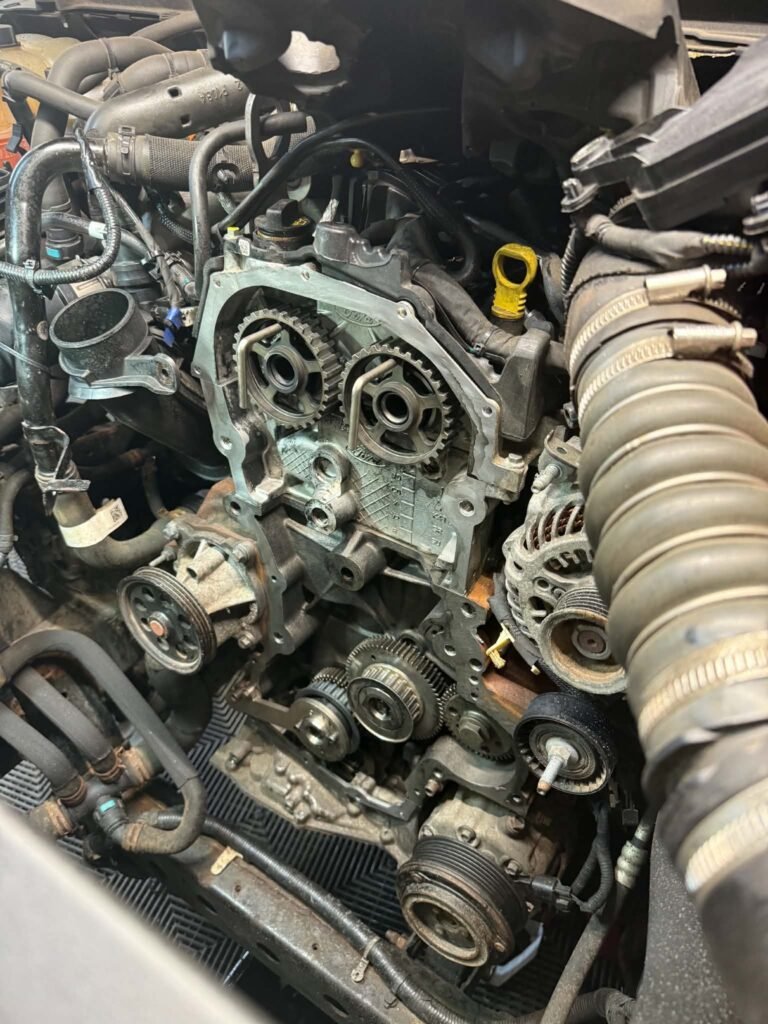
    Timing belt replacement in progress on a car engine

    A timing belt keeps the crankshaft and camshaft turning in step, so the valves open and close at exactly the right moment relative to the pistons. It is a toothed rubber belt doing a job that absolutely cannot be interrupted, and it has a defined service life for that reason.

    The Interval Has Two Numbers And People Only Remember One

    Every manufacturer specifies a cambelt interval as a mileage and a time limit, whichever arrives first. Depending on the engine the mileage might be anywhere from around 60,000 to well over 100,000, and the time limit is commonly somewhere between four and ten years.

    The mileage figure is the one everybody knows. The years figure is the one that catches people out, and it is the more important of the two for a lot of cars on the road now.

    Here is why. Rubber does not need to be moving to deteriorate. It ages in the engine bay from heat cycling every time the car is driven, from ozone and oxygen attack, and simply from time — plasticisers migrate out, the compound hardens, and the belt loses flexibility. A ten-year-old belt with 40,000 miles on it is not a nearly-new belt. It is an old belt that has done few miles, and a hardened belt can shed teeth or snap without ever getting near its mileage limit.

    That makes a low-mileage older car one of the highest-risk cases there is, and it is exactly the car whose owner is most likely to say the belt cannot be due yet.

    Worth knowing: the interval clock runs from when the belt was fitted, not from when the car was registered. If you have no record of a belt change and the car is past its age limit, the sensible assumption is that it is on the original belt. A missing record is not evidence that the job was done.

    Interference Engines And What A Snapped Belt Does

    Most modern engines are what is called an interference design. The valves, when open, come into the space the piston travels through — the timing is what keeps them out of each other’s way. It is an efficient way to build an engine and it works perfectly, right up until the timing stops.

    When a belt breaks on an interference engine, the camshaft stops and the crankshaft keeps turning under the car’s own momentum. Pistons come up to meet valves that are still hanging open. In the space of a second or two you get bent valves, damaged valve guides, quite possibly damaged pistons and cylinder head, and on a bad one a broken piston, a scored bore or a damaged con rod.

    The bill for that is usually more than a car of ordinary age and mileage is worth. Plenty of otherwise sound vehicles get scrapped for exactly this reason. Some engines are non-interference and will simply stop and need a new belt fitted, but you should not assume yours is one unless you have checked.

    There is no warning, either. A belt does not squeal or rattle before it goes, and there is no gauge for it. You cannot inspect your way to safety — on most engines you cannot see enough of the belt to judge it, and a belt can look acceptable and be at the end of its life. This is a replace-on-schedule item, not a check-and-see item.

    Change The Water Pump And Tensioner At The Same Time

    When the belt comes off, the tensioner, idler pulleys and — on most engines — the water pump are all right there, and on many designs the belt drives the pump directly. It is standard practice to replace them together, and it is not padding the bill.

    The reason is arithmetic. Almost all the cost of a cambelt job is labour: stripping covers, ancillary belts, sometimes an engine mount, then locking and timing everything correctly on reassembly. The tensioner and water pump are relatively inexpensive parts and they have similar service lives to the belt. Reuse a tired tensioner and it can fail and destroy a brand new belt — with all the consequences above. Reuse a water pump and if it leaks in two years, coolant contaminates the belt and you pay the entire labour bill again.

    So the right job is belt, tensioner, idlers, and water pump where it is driven by the belt, plus fresh coolant. Anyone quoting a belt on its own is either quoting a different job or has not explained it well.

    Belt Or Chain: How To Tell What You Have

    Some engines use a timing chain instead, running in oil and driven off the crank. Chains are generally designed to last much longer and are not a scheduled replacement item in the same way — but “longer” is not “forever”. Chains stretch, and the guides and tensioners wear. A rattle on startup that fades after a few seconds is the classic symptom of a chain and tensioner needing attention, and some engines have a well-earned reputation for it. A chain failure does the same damage as a belt failure.

    To find out which you have and what the interval is:

    • Check the handbook and service schedule for your exact engine, not just the model
    • Check the service history for a belt change with a date and mileage
    • Look for a belt sticker under the bonnet — anyone doing the job properly usually leaves one with the date and mileage on it
    • Ask us with the registration. The interval varies between engine variants of the same car, so the reg is the reliable way to be certain

    Buying A Used Car With No Belt History

    This comes up constantly, and the answer is not complicated. If the car is a belt engine, is past either the age or mileage interval, and there is no documented change, budget for the job as part of the purchase. Not “keep an eye on it” — budget for it.

    A seller saying it has been done does not count without paperwork. An invoice naming the parts, or a dated sticker, or a stamp that specifically says cambelt is what counts. If you are negotiating, the cost of the job is a perfectly reasonable thing to raise, because you are about to spend it.

    The same applies to a car that has been standing for a long period. Years off the road still count as years on the belt, and a car that has sat for three years in a garage has a belt three years older than when it went in.

    The Short Version

    Find out whether your engine has a belt or a chain. If it is a belt, find the interval in miles and in years, and work to whichever comes first. Do not let the years slide because the mileage is low. Replace the tensioner and water pump with it. And if you genuinely do not know when it was last done, treat it as due, because the cost of being wrong is the whole engine.

    Timing belts are part of our servicing and repair work. Because of what the job involves, cambelts are normally booked in with us rather than done at the roadside — send us the registration and we will confirm the interval and what the job needs on your engine.

    Not Sure When Yours Was Last Done?

    Send us your registration and we will tell you the interval for your exact engine and what the job involves.

    📞 Call 07803 397561 Message On WhatsApp
  • Brake Squeal, Judder Or Grinding: What Each Noise Means

    📞 07803 397561 ✉️ info@vdlvehiclesolutions.co.uk 📍 Derbyshire · Staffordshire · Cheshire Emergency Call-Outs Available
    Home › Blog
    Servicing & Repairs

    Brake Squeal, Judder Or Grinding: What Each Noise Means

    VDL Vehicle Solutions · 12 October 2026

    Brakes tell you what is wrong with them if you know what you are listening for. Some noises are nothing at all, one of them means get off the road now.

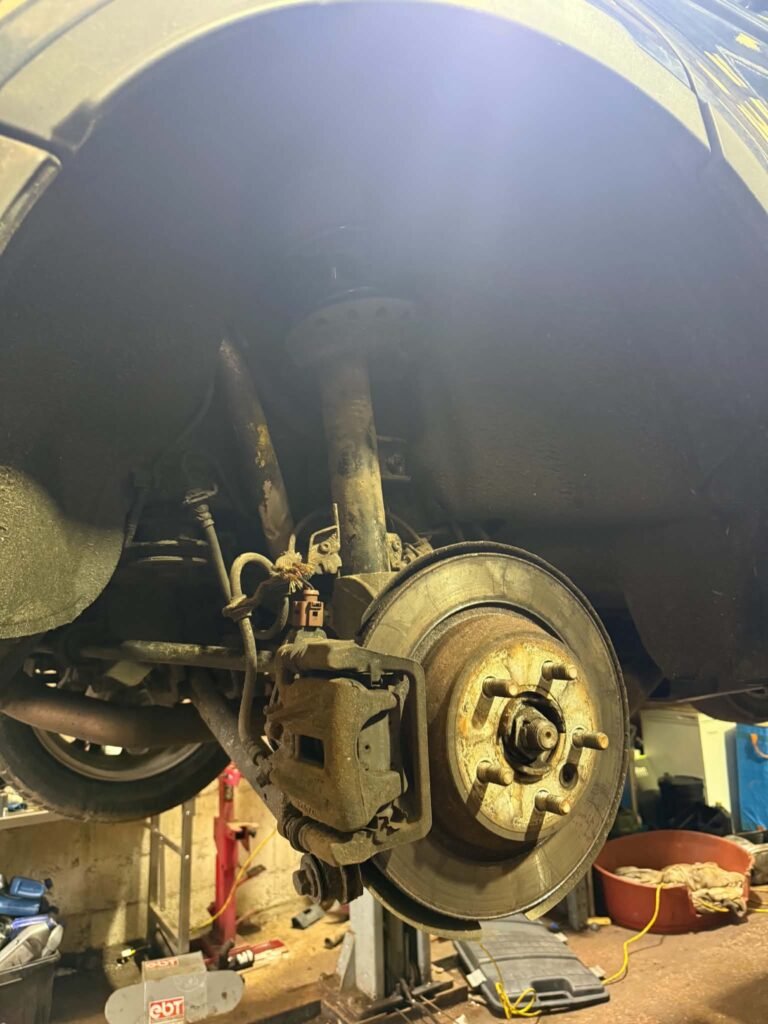
    Brake disc and pad inspection during a mobile brake repair

    Brakes are the one system on a car where people are reluctant to gamble, which is sensible, but it also means a fair number of pads and discs get replaced because of a noise that was never a fault. Knowing which noise is which saves money in one direction and saves you a much bigger bill in the other.

    The First Few Stops Squeal And Then Stops

    Start with the harmless one, because it is by far the most common. Leave a car out overnight in damp weather and a thin film of surface rust forms on the discs. It is iron, it is bare, and it happens within hours. The first few applications of the brake scrape that film off, which can produce a squeal or a light grinding note, and then it goes away and does not come back until the car has stood again.

    If the noise appears on the first couple of stops of the day, clears completely, and the brakes feel entirely normal, that is surface rust. It needs nothing. It gets worse in winter, worse again if the car sits outside on a driveway, and worse still after the roads have been salted.

    Squeal That Does Not Go Away

    A persistent squeal is a vibration — the pad is chattering against the disc at a frequency you can hear. Several things cause it:

    • Brake dust and debris built up in the caliper and between pad and disc. Sometimes a clean and proper re-lubrication of the slides and backing plates is all it takes.
    • Glazed pads or discs. Overheat a brake — a long descent, a heavy tow, sustained hard use — and the friction surface can harden and go shiny. A glazed brake squeals and bites less well than it should.
    • Cheap pads. Friction material quality varies enormously and some budget pads squeal from the day they are fitted regardless of how carefully the job was done.
    • Missing or wrong hardware. Anti-rattle shims, clips and the right grease in the right places are there specifically to stop this. Leave them out and the brake will talk to you.
    • Wear indicators. Many pads have a small metal tab that contacts the disc when the material gets low, deliberately making a noise. That is the pad telling you it is nearly done.

    A persistent squeal is not usually an emergency, but it does want looking at, because the difference between “needs a clean and some grease” and “the pads are nearly out” is not something you can hear from the driver’s seat.

    Judder Through The Pedal Or Steering Wheel

    This one feels rather than sounds wrong: a pulsing in the brake pedal, a shudder through the steering wheel, or the whole car nodding as you slow from higher speeds. It is almost always down to the disc surface not being flat or not being an even thickness all the way round.

    The usual causes are thickness variation from uneven wear, genuine distortion from severe heat, and — very commonly in this country — corrosion. A car that has stood for weeks develops pitting and heavy rust on the disc face, particularly in the band the pad does not cover, and once the surface is uneven the pad passes over high and low spots on every rotation. That is your pulse.

    It gets worse if a car is parked up with the brakes hot and wet, which is why a vehicle laid up over winter often comes back with juddering brakes that were fine when it went away.

    Worth knowing: judder is not always the brakes. Worn suspension or steering components, a seized caliper on one side, or wheels out of balance can all produce something that feels similar. If the shudder is there under braking only, look at the brakes; if it is there at speed whether you brake or not, look wider. Replacing discs to cure a wheel balance problem is a waste of good discs.

    Grinding: Stop Driving

    A harsh, metallic grinding that is there every time you brake, gets louder with pressure, and does not clear after a few stops means metal is running on metal. The friction material has gone and the pad backing plate — or the rivets in it — is cutting into the disc face.

    This is the one to take seriously immediately, for three reasons. Braking performance is significantly reduced, because a steel backing plate is a poor brake. The disc is being destroyed as you drive, turning a pad replacement into pads and discs. And a pad worn that far can break up or fall out of the caliper entirely, at which point that corner has no brake at all.

    If a car is grinding, it should not be driven further than it has to be. That is a genuine safety issue rather than a cautious garage upselling you.

    Other Noises Worth Knowing

    • A rhythmic click or scrape that follows wheel speed rather than braking — often a stone caught between the disc and the shield, sometimes a loose shield fouling. Usually trivial, occasionally not.
    • A groan or moan at very low speed, parking or crawling in traffic. Often just friction material characteristics and nothing to fix.
    • A smell of hot metal after a drive, plus one wheel much hotter than the others — that is a sticking caliper or a seized slide pin. It ruins fuel economy, destroys a pad and disc quickly, and can get hot enough to be dangerous.
    • A handbrake that binds after standing, common on cars with rear drums or cable-operated calipers, especially after they have been parked up wet and salty.

    Urgent, Or Can It Wait?

    The honest version:

    • Get it looked at now: grinding, a pedal that goes soft or sinks, a pedal that needs pumping, braking that pulls hard to one side, a burning smell with one wheel hot, or a brake warning light.
    • Get it booked in soon: persistent squeal, judder under braking, brakes that feel less confident than they did, or a car that has been standing for months.
    • Leave it alone: the first-few-stops rust squeal on a damp morning, and a bit of groan at parking speed.

    Making Brakes Last Longer

    Nothing exotic. Use engine braking on long descents instead of riding the brakes, which is the main reason hill-country cars glaze pads. Try not to park up with brakes hot and soaking. Give a car that mostly does short trips an occasional longer run so the discs dry out and clean themselves. And if a car is going to sit for a long period, leave it somewhere dry if you can.

    Brakes are one of the jobs that suit being done where the car is. Pads, discs, calipers and fluid can all be dealt with on your driveway as part of our servicing and repair work, and if something turns out to need more than that, it gets booked in with us. If a brake has failed and the car should not be driven, roadside assistance is the better first call, with emergency call-outs when available.

    Brakes Making A Noise?

    Tell us what you can hear and when, and we will tell you whether it needs doing today or can wait.

    📞 Call 07803 397561 Message On WhatsApp
  • Interim, Full Or Major Service: What Is The Difference?

    📞 07803 397561 ✉️ info@vdlvehiclesolutions.co.uk 📍 Derbyshire · Staffordshire · Cheshire Emergency Call-Outs Available
    Home › Blog
    Servicing & Repairs

    Interim, Full Or Major Service: What Is The Difference?

    VDL Vehicle Solutions · 7 October 2026

    Three names, no legal definitions, and a lot of confusion about what you are buying. This is what each one actually covers and how to work out which your car needs.

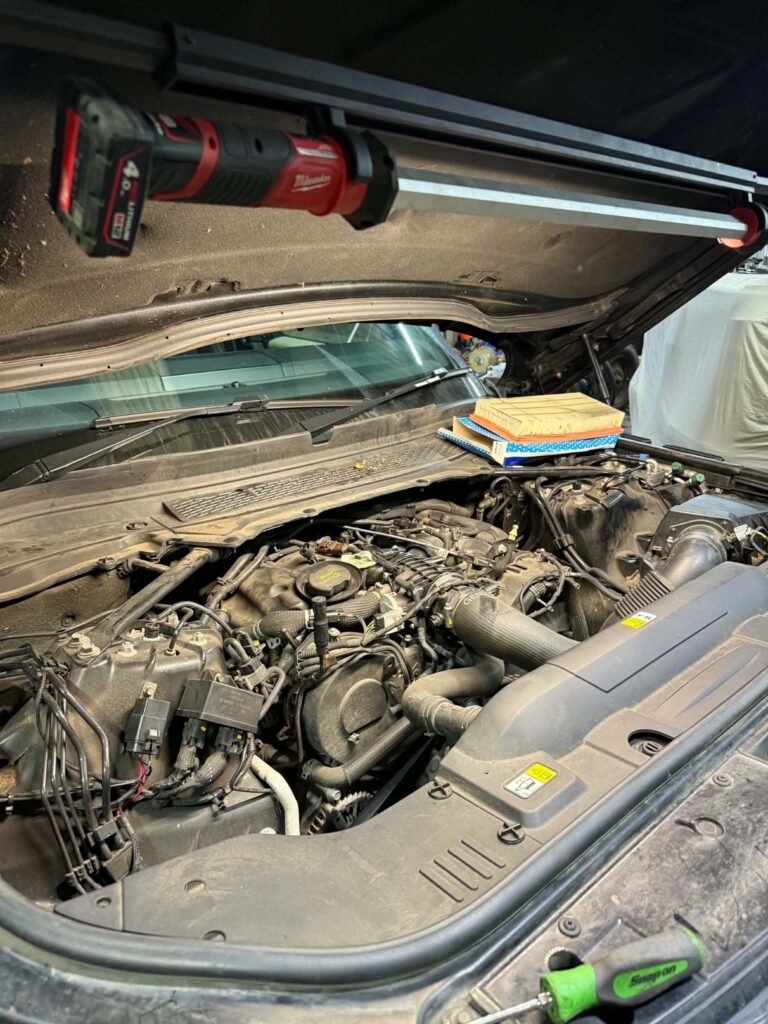
    Oil and filter change being carried out during a full car service

    Start with something the industry does not advertise: “interim”, “full” and “major” are trade conventions, not defined standards. Nobody is obliged to include any particular item in any of them. What matters is what is on the schedule, and whether the garage will tell you plainly what that is before they start.

    That said, the conventions are reasonably consistent, and they exist for a sensible reason. Some jobs need doing twice as often as others, so bundling everything into one annual visit would mean either doing cheap work too rarely or expensive work too often.

    What An Interim Service Covers

    An interim — sometimes called a basic or intermediate service — is the short one, usually done between full services or annually on a car that does very few miles.

    Typically it includes an engine oil and oil filter change, a check of all levels and top-ups where needed, a visual inspection of brakes, tyres, steering and suspension components, a look at the exhaust, belts and hoses, lights and wipers checked, and a general look over for leaks and anything obviously on its way out.

    What it usually does not include is the other filters. Air, fuel and cabin filters normally sit on the full service list, and that is the main practical difference.

    What A Full Service Adds

    A full service does everything the interim does, plus the items that come round annually or at longer mileages. In broad terms:

    • Air filter replaced
    • Cabin or pollen filter replaced
    • Fuel filter replaced where the schedule calls for it — common on diesels, less so on petrols
    • Spark plugs on petrol cars, depending on the type fitted and the interval
    • Brakes inspected more thoroughly, including measuring pad and disc wear rather than glancing at them
    • Coolant strength and brake fluid condition tested, not just eyeballed
    • A wider check of suspension, bushes, driveshaft gaiters, steering joints and exhaust mountings
    • Road test, where the point is to feel for things a static check will never find

    For most people running a normal car with normal mileage, this is the sensible default. We will say that straight rather than dress it up: unless your car covers very few miles or you know the last full service was recent, a full service once a year is the option that keeps on top of things without paying for work the car does not need yet.

    What A Major Service Adds

    A major service is a full service with the longer-interval items folded in. Which items those are depends entirely on the car, which is why a major service quoted without reference to your vehicle should make you ask questions. It commonly includes brake fluid renewal, coolant renewal, and depending on the schedule the gearbox oil, differential oil, or transmission fluid on an automatic.

    Two things a major service is not: it is not a cambelt change, and it is not an MOT. Timing belts run to their own interval and are a separate job — an important one — and they get priced separately because the work involved varies enormously between engines. Some schedules do line the two up, which is worth knowing when you budget.

    Worth knowing: brake fluid absorbs moisture out of the air over time, and the amount it has absorbed decides the temperature at which it boils. Fluid that boils in heavy braking gives you a pedal that goes soft or to the floor. It is a cheap item, it is easy to test, and it is one of the most commonly skipped things on a service list because nothing feels wrong until the day it does.

    Intervals: Mileage And Time Both Count

    Every manufacturer publishes an interval expressed two ways — a mileage figure and a time figure, whichever comes first. People remember the mileage and ignore the time, and that is exactly the wrong way round for a lot of cars now.

    Oil does not only wear out from miles. It degrades from heat cycling, it gets diluted by fuel and contaminated by combustion by-products, and it collects moisture. On a car doing short trips the engine may barely reach full operating temperature, so the moisture never boils off and the oil ages faster per mile than it would on a car doing motorway runs. Acids build up in oil that is sitting in a cold engine, and those acids attack bearing surfaces whether you are driving or not.

    So a car doing 3,000 miles a year still needs an annual oil change. Arguably it needs one more than the high-mileage car does, because those 3,000 miles were probably the hardest kind of use an engine gets. A car parked most of the week and used for a few short journeys is in the demanding category, not the easy one.

    Choosing Based On How You Actually Use The Car

    Forget the names for a minute and think about the driving:

    • High mileage, mostly longer runs. Interim at the halfway point, full annually. You will hit the mileage trigger before the time one, so you will be servicing more than once a year.
    • Average mileage, mixed driving. Full service annually. Major when the schedule’s longer-interval items fall due, typically every second or third year.
    • Low mileage, short trips. Full service annually regardless of what the odometer says, and pay attention to brake fluid, coolant and corrosion — standing does more damage than driving here.
    • Vans and anything that works for a living. Shorter intervals, more often. Load, idling and stop-start town work are hard on oil, brakes and clutches, and downtime costs more than servicing.
    • Car that has stood for a long while. Treat it as needing a full service before you rely on it, whatever the last stamp says. Fluids, tyres and brakes all deteriorate standing still.

    Why The Record Matters As Much As The Work

    A service is worth having done properly and it is worth having written down. A clear history with dates, mileages, what was replaced and the parts used protects the car’s value, helps whoever works on it next, and matters if there is ever a warranty question. Loose receipts in the glovebox are better than nothing, but a proper record is better still.

    If you are not sure what is due on your car, tell us the make, model and mileage and we will tell you what the schedule asks for and what we would actually do. Our servicing and repair work is carried out at your home or workplace, and where a job needs more than a mobile setup allows it gets booked in with us instead.

    Not Sure What Your Car Is Due?

    Send us the make, model and mileage and we will tell you what needs doing — and what does not.

    📞 Call 07803 397561 Message On WhatsApp