VDL Vehicle Solutions

Category: Winter & Seasonal

Cold weather, salted roads and dark nights — keeping a vehicle reliable through a Peak District winter.

  • Antifreeze: Strength Matters More Than Level

    📞 07803 397561 ✉️ info@vdlvehiclesolutions.co.uk 📍 Derbyshire · Staffordshire · Cheshire Emergency Call-Outs Available
    Home › Blog
    Winter & Seasonal

    Antifreeze: Strength Matters More Than Level

    VDL Vehicle Solutions · 2 November 2026

    A coolant bottle sitting between the marks tells you the system is full. It tells you nothing about whether what is in there will still be liquid at minus eight on the tops.
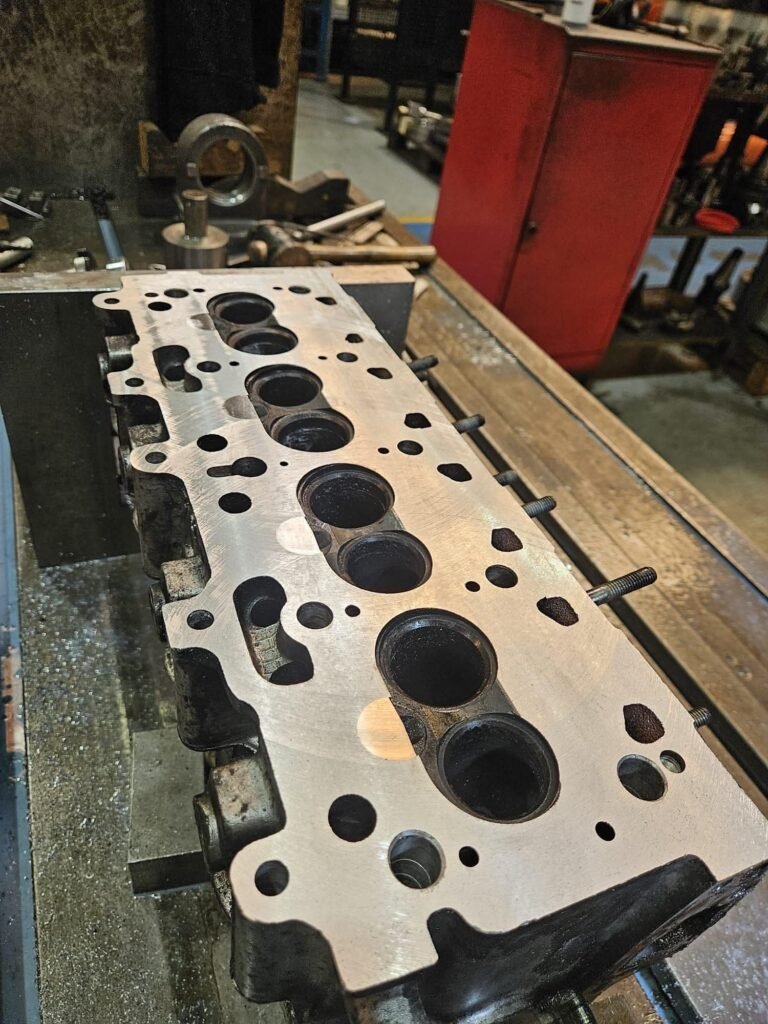
    Cylinder head removed and sitting on the bench

    Coolant is the fluid nobody thinks about until something expensive happens. Oil gets changed, brakes get inspected, tyres get looked at — coolant gets glanced at through the side of a plastic bottle once a year and forgotten. And the one thing that glance cannot tell you is the only thing that matters in December.

    Level and concentration are two different measurements. A system can be perfectly full of something that freezes at minus three.

    Level Versus Concentration

    Level is how much fluid is in the system. It should sit between the marks on the expansion tank when the engine is cold, and if it keeps dropping you have a leak that needs finding rather than a bottle you need to keep topping up.

    Concentration is the ratio of antifreeze to water in that fluid. Typically you want somewhere around a 50:50 mix, which is good for protection well below anything the UK weather will produce. At 40 per cent you still have reasonable protection. By the time you are down near 25 or 30 per cent, you are protected against a mild frost and nothing more — and the car will look completely normal while that is true.

    Nothing on the dashboard measures concentration. The car has no idea. It is only found by testing.

    How Top-Ups Quietly Ruin It

    Here is the sequence that gets most cars into trouble, and it is entirely well-intentioned.

    The level drops slightly over a year, because a small weep at a hose clip or a slow loss past a pump seal is normal ageing. Somebody notices, sees the bottle is low, and tops it up with water — because water is what is to hand, and because it is only a bit. Next year the same. The year after, the same again.

    Each top-up dilutes what is already in there. Three or four topping-ups with plain water across a few years, plus whatever was lost as a pressure-cap release of mostly water vapour, and a system that left the factory at 50 per cent can be down at 30 without anyone doing anything careless.

    The fix is simple: top up with pre-mixed coolant of the correct type, or with concentrate diluted properly with deionised water. Never with water from the tap as a habit — once in an emergency to get home is a reasonable trade, but it needs correcting afterwards, not forgetting.

    What Happens When It Freezes

    Water expands as it freezes, and it does not care what is in the way. In a cooling system, the damage goes in roughly this order of cost:

    • Split hoses. The cheapest outcome, and the one you want if any of it is going to happen. A hose bursts, you lose all the coolant, the car overheats the moment you drive it.
    • A cracked radiator or expansion tank. Plastic end tanks split readily when ice forms inside them.
    • The heater matrix. Buried in the dashboard, so the part may be modest and the labour is anything but. A leaking matrix also means coolant on the carpet and a windscreen that mists up and will not clear.
    • A cracked block or head. Ice forming in the water jackets can crack cast iron and aluminium. On most cars this is the point at which the repair is worth more than the car.

    Cars can also freeze solid without breaking anything and simply overheat on the way to work, because the coolant is a block of slush that will not circulate while the engine is producing heat. Either way the ending is not good.

    This is not a theoretical risk at altitude. The villages above the A6, the moorland roads, anywhere that sits in a frost hollow — those places see genuinely cold nights, repeatedly, and a car parked outside all night is at ambient temperature by morning.

    Testing It Takes Seconds

    A refractometer is the right tool. A couple of drops of coolant on the plate, hold it up to the light, and read the freezing point off the scale directly. It is quick, it is accurate, and it works on all the common coolant chemistries as long as you read the correct scale.

    The cheap floating-ball hydrometers sold in accessory shops are better than nothing but are crude, temperature-sensitive and easy to misread. If you are making a decision about whether a car is safe for winter, use a refractometer or have someone test it who has one.

    We test coolant strength as part of a service and pre-winter check, because it takes moments and it is the sort of thing that only ever gets found by looking.

    Worth knowing: a refractometer reads the freeze point, not the condition of the coolant. Fluid that tests strong can still be chemically exhausted — brown, cloudy, or with a sludge in the expansion tank. If it looks wrong, it needs changing regardless of what the scale says.

    Antifreeze Does Three Jobs, Not One

    This is the part that surprises people, and it is why coolant needs changing on cars that live somewhere mild and have never been near a frost.

    It lowers the freezing point. The obvious job, and the one it is named after.

    It raises the boiling point and carries heat. A properly mixed coolant under system pressure is far less likely to boil locally at a hot spot in the head, which is where damage starts.

    It prevents corrosion and lubricates. This is the one that matters year-round. A modern engine has aluminium, cast iron, steel, brass, solder and rubber all sharing one fluid, and without inhibitors they corrode — and they corrode each other, galvanically, faster than they would alone. The inhibitor package also protects and lubricates the water pump seal.

    Those inhibitors deplete. They get used up doing their job, and after a number of years they are simply gone. The fluid still stops freezing, so it passes the obvious test, while internally the radiator is silting up, the pump seal is wearing, the heater matrix is narrowing, and the thermostat is gumming up. That is how a car ends up with a corroded-through radiator and an overheating problem in July.

    So coolant has a change interval for reasons that have nothing to do with winter, and skipping it is a slow, invisible expense.

    Types, And Why Mixing Them Is A Bad Idea

    Coolants are grouped by their inhibitor chemistry, and the groups are not interchangeable:

    • IAT — the traditional blue or green inorganic type, short life, mostly found on older vehicles.
    • OAT — organic acid technology, long life, usually red, pink or orange depending on the manufacturer.
    • HOAT — a hybrid, with both organic and some inorganic inhibitors, common on a lot of European vehicles, often yellow or turquoise.

    Mix an OAT with an IAT and the additive packages can react, dropping out of solution as a gel or sludge that blocks the narrow passages in a radiator and heater matrix. You end up with a system that is full, tests fine for freeze point, and does not cool properly because the passages are silting up.

    Two practical rules. Colour is not a specification — different manufacturers dye different chemistries the same colours, so never choose coolant by matching the colour in the bottle. And use the specification in the handbook, or the manufacturer’s own approval, rather than a bottle labelled as suitable for everything. If you genuinely do not know what is in a system, the right answer is a flush and refill with the correct type, not a top-up and hope.

    Change Intervals

    Intervals vary enormously by vehicle and coolant type, from a couple of years on older IAT systems to long-life schedules measured in many years or high mileage. The handbook is the authority for your car, and it is worth actually looking rather than assuming a modern car never needs it.

    Beyond the schedule, change it if: the fluid is brown, rusty or cloudy, there is sludge or oil in the expansion tank, it has been topped up repeatedly with water, the system has been opened for a repair, or nobody can tell you when it was last done. A coolant change on a system that has been neglected is one of the better-value jobs on a car, because it heads off a radiator, a pump and a matrix all at once.

    And while the system is being looked at, the hoses and clips are worth ten seconds of attention each. A hose that has gone hard, soft or spongy near a clip is the one that lets go on the coldest morning of the year, which is a roadside call-out that a minute in a warm garage would have prevented.

    Get The Coolant Tested Before The Frosts

    We will check strength, condition and hoses at your home or workplace and tell you what actually needs doing.

    📞 Call 07803 397561 Message On WhatsApp
  • Breaking Down On A Rural Road: What To Do First

    📞 07803 397561 ✉️ info@vdlvehiclesolutions.co.uk 📍 Derbyshire · Staffordshire · Cheshire Emergency Call-Outs Available
    Home › Blog
    Winter & Seasonal

    Breaking Down On A Rural Road: What To Do First

    VDL Vehicle Solutions · 26 October 2026

    A breakdown on a country lane is a different problem from a breakdown in a car park. The first two minutes matter more than anything you do afterwards, so it is worth knowing the order before you need it.

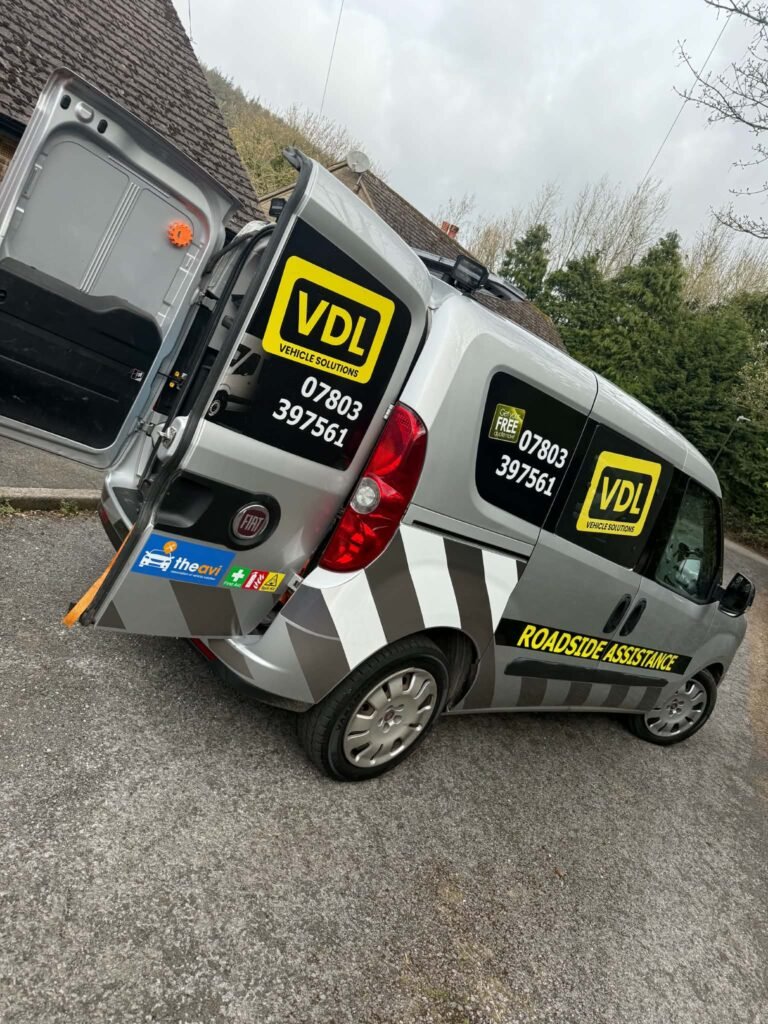
    Mobile mechanic van with doors open at a roadside breakdown

    Most drivers have a rough plan for breaking down on a motorway, because it gets drilled into you. Far fewer have thought about the lanes between Buxton and Ashbourne, the climbs over the moors, or the stretch of A-road where the verge disappears and there are hedges on both sides. Those are the places where a breakdown gets genuinely dangerous, and where getting the order right makes the difference.

    The order below is deliberately about safety first and the car second. The car is already broken. It will still be broken in five minutes.

    1. Get Off The Carriageway If The Car Will Still Move

    The single best thing that can happen is that you coast somewhere sensible before you stop. If the engine has cut out, you usually have momentum and some steering left, and that is worth spending immediately rather than stopping where you are and thinking about it.

    What you are looking for, in order of preference: a lay-by, a field gateway, a farm entrance, a pub or hall car park, a wide verge, the inside of a straight. What you are trying to avoid above all is stopping on a blind bend or just over the crest of a hill, because the first driver who comes round or over will have no time at all.

    If you have a choice between a slightly awkward gateway fifty yards further on and stopping on a bend now, take the gateway. Steering a dead car is heavy and the brakes lose assistance, so it takes more effort than you expect — but it is usually doable at low speed.

    2. Hazards On, Straight Away

    Hazard lights before anything else, before you look under the bonnet, before you get your phone out. On an unlit lane at dusk they are the only thing telling an approaching driver that a stationary object is a car and not part of the scenery. Leave the sidelights on too if it is dark or murky.

    If you have a warning triangle and you are somewhere with a decent view — a straight, or a road where traffic is slow — put it out well back from the car. If you are on a bend or a fast road where standing in the carriageway to place it means walking into traffic, do not. Never put a triangle out on a motorway.

    3. Decide Whether To Get Out Or Stay Put

    This is the part where the standard advice gets misapplied, and it is worth thinking about properly.

    On a fast road — a dual carriageway, or an A-road where traffic is doing sixty — the safest place is out of the car and behind a barrier or up the bank, on the side away from traffic, with everyone out via the doors furthest from the carriageway. A stationary car being hit from behind at speed is the scenario that kills people, and sitting in it is the worst place to be.

    On a narrow lane with bends and hedges, the calculation changes, but not in the way people assume. Staying in a car parked on a blind bend is genuinely dangerous, because the impact that reaches you is the one that nobody saw coming. If the car is somewhere exposed, get out and get behind something solid — a wall, a gate, a bank — even if it means standing in a wet field for twenty minutes.

    The times it is reasonable to stay in the vehicle are when you are properly off the road in a lay-by or gateway with a clear view, or when getting out would put you in more danger than staying — no verge at all, water, or a situation where you cannot safely get everyone clear. If you do stay, seatbelts on, facing forwards, doors unlocked so help can reach you.

    Worth knowing: on any road where traffic is moving quickly, leave the vehicle by the passenger side and get behind a barrier. Standing in front of the car, or leaning into the engine bay from the road side, puts you in the exact spot a distracted driver will occupy.

    4. Work Out Where You Are Before You Lose Signal

    Signal in the valleys around here is patchy to non-existent. Down in the Goyt, parts of the Dove valley, the lanes behind Whaley Bridge and plenty of the moorland roads, you may get one bar for a few seconds and then nothing. That makes a precise location the most valuable thing you can have ready.

    Build a description you can give in one go:

    • The road number if it has one — A537, A54, B5470 — and which direction you were travelling.
    • The nearest village either side, and roughly how far. “About a mile past Wildboarclough heading towards Congleton” is far more useful than a postcode you guessed.
    • The last thing you passed — a pub, a farm sign, a bridge, a reservoir, a cattle grid, a junction. Landmarks work in a way coordinates you cannot load do not.
    • What3words or a grid reference if you have any data at all and can open the app. If you can, read it out immediately, before signal drops again.

    If you have no signal where the car is, walk to higher ground to make the call rather than staying by the car hoping it improves. Take your phone, keys and a coat, and if there is anyone with you, leave them somewhere safe rather than in the vehicle if the vehicle is exposed.

    5. Have The Right Information Ready When You Call

    If signal is marginal, a call can drop halfway through. Get the essentials out first, in this order, rather than starting with the history of the noise:

    1. Your location, as above.
    2. Your phone number, in case you get cut off.
    3. Make, model and registration, and roughly the age of the vehicle.
    4. What actually happened — cut out and will not restart, will not crank at all, overheating, warning light, flat tyre, lost drive.
    5. Whether you are somewhere safe, and whether there are children, older passengers or a dog in the vehicle.
    6. Whether the car is blocking the road.

    The last two change how a job gets prioritised, so say them early. “I am half in the carriageway on a bend with two kids in the back” is a very different call from “I am in a lay-by and I am fine for a while”.

    What Can Be Fixed There, And What Cannot

    A fair proportion of rural breakdowns are fixable at the roadside. Flat batteries, failed alternators and charging faults, fuel and ignition problems, sensors, a coolant leak that can be traced and patched, a wheel change, electrical faults where damp has got somewhere it should not be. Those are the jobs a mobile roadside repair is genuinely better for, because fixing the car where it stands avoids the cost and time of getting it off a hill first.

    Some things are honestly not roadside jobs, and it is better to say so than to spend two hours proving it. A cambelt failure, a head gasket, a clutch, a gearbox, anything that needs the car raised properly or a part that has to be ordered, and any fault that means the car is not safe to drive even once it starts. Those are recovery, then booked in with us to do properly. Overheating is the one people push their luck with — if the temperature gauge is in the red or there is steam, stop and do not restart it, because a fifteen-minute recovery wait is cheaper than a head.

    What To Keep In The Car

    You do not need a survival kit. Four things cover most of it: a warning triangle, a decent torch that is not your phone, a hi-vis or at least a light-coloured coat, and a power bank so a dying phone does not become the real emergency. If you drive the tops in winter, add a blanket and a bottle of water, because waiting is a bigger part of a rural breakdown than it is in town.

    We cover emergency call-outs across the Peak and the surrounding lanes when available, and being told exactly where you are is what gets somebody to you quickly. Everything else can be worked out when we get there.

    Broken Down Somewhere Awkward?

    Ring with your location and what the car is doing, and we will tell you straight whether it is a roadside fix.

    📞 Call 07803 397561 Message On WhatsApp
  • Road Salt: What It Quietly Destroys Underneath Your Car

    📞 07803 397561 ✉️ info@vdlvehiclesolutions.co.uk 📍 Derbyshire · Staffordshire · Cheshire Emergency Call-Outs Available
    Home › Blog
    Winter & Seasonal

    Road Salt: What It Quietly Destroys Underneath Your Car

    VDL Vehicle Solutions · 21 October 2026

    Nothing ages a car on these roads faster than salt, and almost all of the damage happens where you never look. By the time it is visible from outside, it has been going on for years.

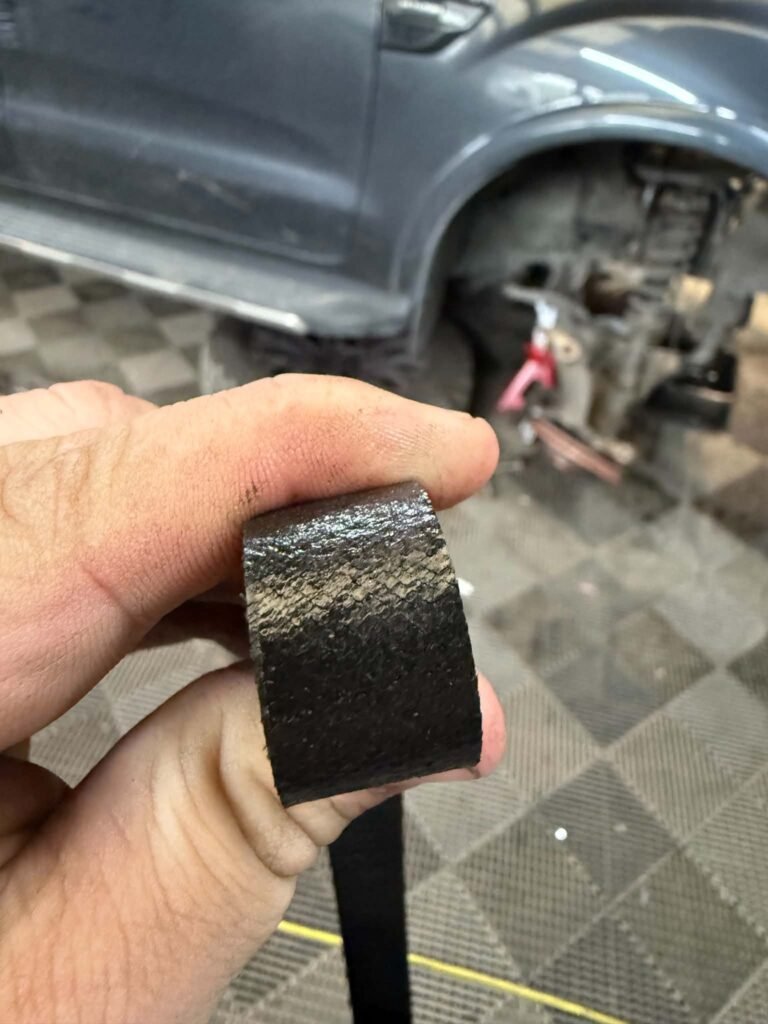
    Corrosion on brake pipes and underbody components caused by road salt

    Gritters go out earlier than most people expect, and on the higher routes they are working well before anyone has thought about winter. A hard frost on the tops does not need snow to bring the lorries out, and once the salt is down it stays on the road surface, gets kicked up as brine by every vehicle, and coats the underside of anything that drives through it.

    The chemistry is simple enough. Salt dissolved in water makes the water conductive, which is exactly what steel needs to rust quickly — corrosion is an electrochemical process and salt water accelerates it dramatically. Worse, salt is hygroscopic: it holds onto moisture. So a car parked up after a salted drive is not drying out. It has a damp, salty film underneath keeping the reaction going for days, whether it moves or not.

    What Corrodes First

    Not the panels. The underside, in a fairly predictable order.

    Brake pipes. The most serious item on the list, covered properly below. Steel lines running the length of the car, frequently in the path of spray thrown off the front wheels.

    Fuel lines and fuel tank straps. Same exposure as brake pipes, less immediately dangerous but no fun to deal with, and a corroded tank strap is an MOT matter as well as an obvious problem.

    Subframes, sills and chassis members. These are usually boxed sections, which is the problem. Salty water finds its way inside through drain holes and seams and cannot get out, so the corrosion happens on the inside where nobody sees it. A sill can look sound and be paper thin, and corrosion near a suspension or seatbelt mounting is a straight MOT failure.

    Suspension mounts, spring pans and rear beams. Spring pans on the rear of many cars collect road debris and hold it damp against the metal. They rot from the inside of the dish outwards, which is why they are a frequent find.

    Exhaust systems and their hangers. The system itself often outlasts the brackets and rubber mounts holding it up. A snapped hanger lets the system hang and rattle and eventually break at a joint.

    Brake calipers, slide pins and handbrake mechanisms. Salt gets into slides and cables and seizes them. That is why sticking calipers and binding handbrakes are far more common after a winter than before one.

    Electrical connectors and earth points. Nothing dramatic, just a long, slow source of intermittent faults. A corroded earth causes the sort of odd electrical behaviour that is maddening to chase and easy to prevent.

    Why Brake Pipes Are The Serious One

    Everything else on that list is an inconvenience or a repair bill. Brake pipes are a safety issue, and they deserve treating differently.

    The pipes carry hydraulic pressure from the master cylinder to each corner. They are steel, coated when new, and they run underneath the car where they take the full force of wheel spray, grit and salt for the whole of their life. When the coating is breached, they corrode from the outside inwards, gradually losing wall thickness.

    The problem is that this happens without any symptom whatsoever. The brakes feel completely normal right up to the moment a pipe gives way, and when it goes it does so under pressure — typically at the moment you brake hard, because that is when the pressure is highest. You lose part of the braking system instantly, with no warning at all.

    They are also difficult to assess casually. Surface rust on a pipe is not necessarily a problem; heavy flaking corrosion or pitting is. Judging that means getting underneath with a light and looking properly, including along the runs that pass behind shields and above the fuel tank where they are awkward to see.

    Worth knowing: corroded brake pipes are a common MOT failure and one of the reasons an otherwise decent car suddenly needs money spent. Found in autumn, it is a planned job. Found at an MOT in February, the car is off the road until it is done, because it is not something that can be left. It is not expensive work in itself — the cost is in the timing and the surprise.

    Washing The Underside Matters More Than The Paint

    Most people wash a car because of how it looks, so they wash the bit they can see. For longevity, that is the wrong way round. The paint on modern cars is durable and galvanised panels resist rust well. The underside has far less protection and takes far more punishment.

    What actually helps:

    • Rinse the underside regularly through the salted months. Plain cold water is enough — the aim is dilution, getting the salt off before it sits. Once a fortnight in a hard winter is worth far more than a detailed wash in April.
    • Get water into the arches and up behind the wheels, where spray is thrown hardest and mud packs in. A hose with a decent nozzle does the job; a jet wash lance angled up into the arches is better.
    • Clear out the drain holes. Sills, doors and boxed sections have drains that block with leaves and road grit. Blocked drains mean water sits inside the section — that is how cars rot from the inside out.
    • Do not park immediately after a salted drive without rinsing, if you can avoid it. A car standing with a salt film underneath is corroding the whole time it sits.
    • A garage is not automatically better. A warm, unventilated garage with a wet salty car in it can be worse than a cold, breezy driveway, because it keeps everything damp for longer. Ventilation beats warmth.

    Underbody protection treatments and cavity waxes are worth considering on a car you intend to keep. They work best applied to metal that is clean and dry and already sound — spraying wax over active flaking rust just hides it. If the car is already corroding, deal with that first.

    What An Autumn Underbody Inspection Finds

    Done before the salt goes down rather than after, a proper look underneath is one of the more useful things you can have done to a car in this part of the country. What it turns up:

    • Brake pipes and flexible hoses assessed properly, along their whole run
    • Fuel lines, tank straps and shields checked for corrosion and security
    • Sills, subframes, spring pans and chassis members inspected, including the MOT prescribed areas around mountings
    • Suspension bushes, ball joints, springs and shock absorbers checked for wear, leaks and cracks
    • Exhaust system and all its hangers and mounts checked
    • Calipers and slide pins checked for free movement, and the handbrake mechanism checked and lubricated
    • Blocked drain holes cleared while the car is up in the air
    • Leaks identified — anything dripping oil onto a component is also stripping its protection

    The value in doing it now is options. Something found in October can be fixed when it suits you, at a sensible price, on a car that is still on the road. The same fault found in February is found because it failed an MOT or because something broke, and neither of those is a good time to be making decisions.

    If the car has done a few winters on gritted roads and nobody has looked underneath it, it is worth a look. We do underbody inspections as part of our servicing and repair work, wherever the vehicle is parked, and anything needing more than a mobile setup gets booked in with us.

    Have A Look Underneath Before The Gritters Start

    Brake pipes, suspension, sills and exhaust checked properly, at your home or workplace, while you still have options.

    📞 Call 07803 397561 Message On WhatsApp
  • Why Car Batteries Die In Winter And How To Spot It Coming

    📞 07803 397561 ✉️ info@vdlvehiclesolutions.co.uk 📍 Derbyshire · Staffordshire · Cheshire Emergency Call-Outs Available
    Home › Blog
    Winter & Seasonal

    Why Car Batteries Die In Winter And How To Spot It Coming

    VDL Vehicle Solutions · 2 October 2026

    Almost every winter no-start we attend is a battery, and almost every one of them had been getting weaker for months. The car gave warning signs — they just were not obvious ones.

    Mobile mechanic testing a car battery on a cold morning call-out

    Cold Hits A Battery From Both Sides

    A lead-acid battery does not store electricity the way a bucket stores water. It makes electricity on demand, through a chemical reaction between the plates and the acid, and like any chemical reaction it slows down when it gets cold. The colder the battery, the less current it can push out at the moment you turn the key. On a frosty morning a healthy battery is working with a meaningful chunk of its warm-weather output missing, and a tired one has nothing spare at all.

    At the same time the engine is asking for more. Oil thickens as the temperature falls, so the starter has to turn a stiffer engine, and fuel does not vaporise as readily, so it takes longer to catch. Less supply, more demand, on the same morning. That is the whole story of a cold start.

    Why It Starts Fine In October And Fails In December

    A new battery has a lot of margin. It can lose a sizeable share of its output to the cold and still spin the engine over without complaint. Ageing quietly eats that margin — the plates sulphate, active material sheds and settles in the bottom of the case, and capacity falls a little every year. None of it shows up in mild weather, because the margin is still enough to hide it.

    So the car starts perfectly all summer, starts perfectly through a mild autumn, then one morning it drops to minus three and the last of the cushion is gone. Nothing changed overnight. The cold simply removed what had been covering up a problem that started back in spring.

    What A Load Test Tells You That A Jump Start Never Will

    A jump start proves one thing: that with enough current, the engine turns and runs. It tells you nothing about the battery. Plenty of batteries that jump-start happily are finished, and a fair few cars that needed a jump had nothing much wrong with the battery at all.

    A proper test is a different job. Testing under load, or with a conductance tester, measures how the battery behaves while current is drawn out of it and compares that against what it was rated at when new. That separates two things people constantly run together:

    • State of charge — how full it is right now. A flat battery can be recharged and still be a perfectly good battery.
    • State of health — how much of its original capacity it still has. Charging does not bring that back, and it is what decides whether the battery sees the winter out.

    A battery showing 12.6 volts at rest can still collapse the moment it is asked for real current. Voltage on its own is a weak indicator, which is why a quick multimeter reading on the driveway is not worth much.

    The Four Or Five Year Rule Of Thumb

    As a rough guide, a car battery gives four to five years of ordinary use. It is a guide and nothing more — plenty last longer and some give up in three. What shortens the life is mostly how the car gets used: lots of short trips, heavy electrical load sitting in traffic, long spells parked up, and deep discharges from lights or a boot lamp left on.

    The practical version is simple. From about year four, have it tested each autumn instead of letting the first frost test it for you. It takes a couple of minutes and the answer is either “good for another year” or “replace it now, while it is convenient”.

    Worth knowing: many newer cars monitor the battery and adjust charging to suit its age and condition. On those, a replacement often has to be registered or coded to the car — otherwise the charging system keeps treating it as a worn-out battery and never charges it properly. Stop-start cars also need the right type, an AGM or EFB, not a standard battery. Fitting a cheap conventional battery to a stop-start car is one of the most common reasons a brand new battery dies inside a year.

    Bad Battery, Bad Alternator, Or Something Draining It?

    All three end with a car that will not start, so the symptom alone does not tell you which one you have. The pattern usually does.

    • A failing battery cranks slowly, worse when cold, and gets steadily worse over weeks. It may pick up after a long drive and be poor again by morning.
    • A charging fault often brings a battery warning light, dim or flickering lights, and a car that runs after a jump start but goes flat again quickly — or cuts out while driving. The alternator is not putting anything back.
    • A parasitic drain is fine while the car is used daily and flat after it stands two or three days. Something is staying awake when the car should be asleep: a module, an aftermarket accessory, a glovebox or boot lamp, a sticking switch.

    Telling them apart properly means measuring — charging output at the battery under load, and current draw once the car has actually gone to sleep, which takes patience because some modules take a long time to shut down. That is diagnostic work rather than guesswork, and it is the difference between fixing the fault and buying two batteries in one winter.

    Short Journeys Are The Quiet Killer

    Starting the engine is the single biggest thing a battery is ever asked to do. Putting back what the starter took needs time at a reasonable engine speed, and an alternator cannot dump it all back in at once without damaging the battery. Ten minutes to school and ten minutes home does not replace what two cold starts took out, and with headlights, heated screen, blower and heated seats running, the shortfall gets wider.

    Do that all winter and the battery sits permanently part-charged, which is exactly the state that speeds up sulphation. If the car only does short hops, give it a longer run now and then or put a decent smart charger on it occasionally. For anything that stands for weeks, a maintenance charger costs less than the battery it saves.

    Signs Worth Taking Seriously

    • The starter sounds slower than it did a month ago, especially first thing
    • It cranks noticeably worse on cold mornings than on mild ones
    • Interior lights or the dash display dim heavily while cranking
    • Stop-start has quietly stopped working — cars often disable it when the battery is weak
    • It needed a jump once and you never found out why

    Any of those is a reason to get it tested rather than hope. A battery changed on your driveway on a Tuesday afternoon is a small job. The same battery changed at seven on a black morning when you are due at work is a different experience, and if you are already stuck that is what roadside assistance is for, with emergency call-outs when available.

    Get It Tested Before It Catches You Out

    We can test the battery and the charging system where your car sits and tell you straight whether it will see the winter through.

    📞 Call 07803 397561 Message On WhatsApp
  • Winter Car Checks That Actually Matter Before The Cold Sets In

    📞 07803 397561 ✉️ info@vdlvehiclesolutions.co.uk 📍 Derbyshire · Staffordshire · Cheshire Emergency Call-Outs Available
    Home › Blog
    Winter & Seasonal

    Winter Car Checks That Actually Matter Before The Cold Sets In

    VDL Vehicle Solutions · 30 September 2026

    Every autumn the same advice gets recycled, half of it pointless. Here is what genuinely stops a car letting you down between October and February, based on what we actually get called out to.

    Roadside call-out to a car that would not start on a cold morning

    Cold weather does not create faults so much as expose them. A battery that is already tired, a coolant mix that is weaker than it should be, a set of brake discs quietly corroding — all of them will cope in September and give up in December. That is why the useful winter checks are the ones that find a marginal component before it fails, not the ones that involve topping up screenwash and calling it done.

    If you are anywhere in the High Peak or the Staffordshire Moorlands, this matters more than it does in flatter parts of the country. Higher ground means colder mornings for more of the year, and the roads get salted heavily and early.

    1. Have The Battery Tested, Not Guessed At

    Batteries cause more winter call-outs than everything else put together, and almost all of those failures were predictable. A battery does not die suddenly in December — it has usually been weakening all year and the first properly cold morning is simply the point at which it can no longer turn the engine over.

    The important word is tested. A proper test puts the battery under load and measures how it holds up, which tells you whether it will survive the winter. Turning the key and hearing it start tells you nothing about how much reserve is left. If your battery is over four years old, get it tested before the clocks change rather than after.

    Worth knowing: a battery that keeps going flat is not always a bad battery. It can be an alternator not charging properly, or something drawing current while the car is parked. Replacing the battery without testing the charging system is how people end up buying two batteries in a winter.

    2. Check The Coolant Strength, Not Just The Level

    Everyone checks the coolant level. Far fewer check its concentration, which is the bit that actually stops it freezing. Antifreeze degrades over time and gets diluted every time someone tops up with water, and a weak mix can freeze in the coldest weather — which at best splits a hose and at worst cracks a block or a head.

    Testing it takes seconds with a refractometer and is worth doing on any car that has had top-ups or is more than a few years past its last coolant change. It is one of the cheapest checks there is and one of the most expensive problems to fix if you skip it.

    3. Look Underneath, Because The Salt Does

    Road salt goes down early and heavily on the routes over the tops, and it attacks anything steel underneath a car: brake pipes, fuel lines, subframes, exhaust mountings, suspension components. Brake pipes in particular are a genuine safety issue and a common MOT failure, and they corrode from the outside in where you cannot see them without looking properly.

    An underbody look-over in autumn buys you time to fix something on your terms rather than discovering it at an MOT in February. If you cover a lot of salted road, it is the single most useful thing on this list after the battery.

    4. Tyres: Tread Depth And Age Both Count

    The legal minimum is 1.6mm, but grip falls off a cliff below about 3mm in standing water and slush. If you are running close to the limit going into winter, you are effectively choosing to have less grip for the months when you need it most.

    Age matters too. Rubber hardens as it gets older regardless of tread, and a hard tyre grips badly in the cold. A five-year-old tyre with plenty of tread can still be worse in January than a newer tyre with less. Check the four-digit date code on the sidewall.

    Whether cold-weather tyres are worth it depends on where you live. If you are up in Buxton, Chapel or the villages above the A6 and you need to get out every morning regardless, all-season tyres make a real difference. If you are mostly on gritted main roads lower down, good summer tyres with plenty of tread are usually enough.

    5. Wipers, Washers And Lights — The Boring Ones

    These get dismissed as trivial, but they are what turns a dark, wet commute into something unpleasant or dangerous. Smeared wipers on an unlit lane at five in the afternoon are genuinely hazardous, and a blown bulb is both an MOT failure and a reason to be pulled over.

    • Replace wiper blades that judder, smear or leave lines — they are cheap and take minutes
    • Use proper screenwash at winter concentration, not water, which freezes in the jets and the reservoir
    • Walk round the car with the lights on, including the brake lights and the number plate lamp
    • Clean the headlight lenses; a clouded lens can cut light output dramatically

    If your headlights are yellowed or the beam has always been poor, winter is the time to sort it. We fit upgraded lighting and spot lamps for people who drive unlit moorland roads daily, and the difference on a dark lane is not subtle.

    What We Would Skip

    Not everything sold as a winter check is worth paying for. You do not need a fuel system additive, an engine flush or an air-con regas as a seasonal ritual. Air conditioning does help demist a screen quickly, so it is worth having working — but that is a repair if it is broken, not an annual service item.

    If Something Does Go Wrong

    Most cold-weather breakdowns are batteries, charging faults, coolant problems or something electrical that damp has found. The majority of those can be diagnosed and fixed where the vehicle is standing, which is usually cheaper and quicker than recovering it somewhere first. That is the whole reason a mobile service makes sense up here — getting a car down off a hill costs more than fixing the fault.

    Want The Checks Done Properly?

    We can go through all of this at your home or workplace, test rather than guess, and tell you straight what needs doing before the weather turns.

    📞 Call 07803 397561 Message On WhatsApp