Choosing A Dashcam: What Matters And What Does Not
Dashcams are sold on resolution figures, and resolution is one of the least useful numbers on the box. Here is what actually determines whether your footage is worth anything when you need it.
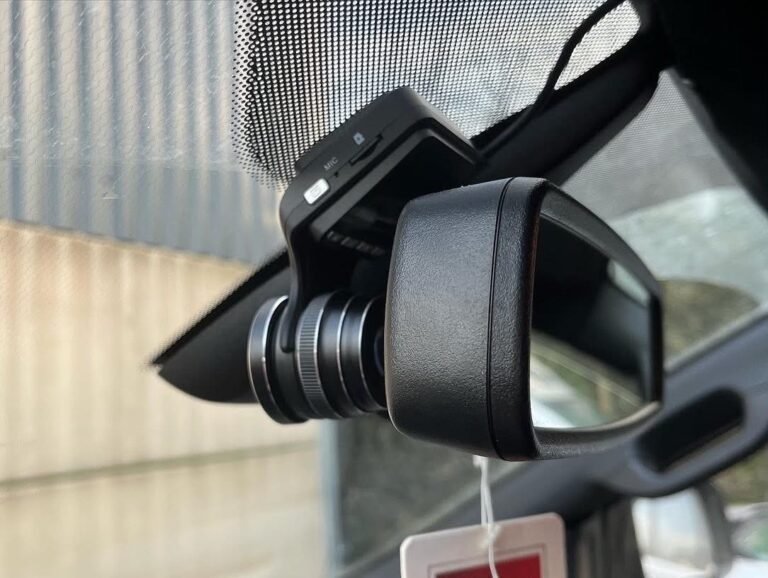
The point of a dashcam is a single frame: the one that shows a registration plate, or shows clearly who crossed the line. Everything about choosing one should work backwards from that. A camera that produces beautiful footage on a sunny afternoon and useless mush at half past five in November has failed at the job, however good the spec sheet looks.
That is worth keeping in mind, because almost all the marketing is about numbers that do not predict night performance at all.
Resolution Versus Sensor Quality
Resolution tells you how many pixels there are. It says nothing about how much light each of those pixels gathers, and in a car, light is the constraint.
A 4K camera with a small, cheap sensor will often produce worse usable footage at night than a 1080p camera with a large, good sensor, because the higher-resolution one is dividing the same amount of light into more pixels and then leaning on noise reduction to hide the result. Noise reduction is what smears a number plate into a grey rectangle.
What to look at instead:
- The sensor, if the maker names it. Cameras that use well-regarded sensors tend to say so. Ones that do not name a sensor are usually not proud of it.
- Aperture — a lower f-number lets in more light. f/1.6 will beat f/2.4 in the dark, all else equal.
- Actual night footage. Find real samples recorded at night in rain, not the manufacturer’s showreel. This is the only test that matters.
- Frame rate. 30fps is fine for most things; 60fps helps freeze a plate on a fast-moving car, but only if the sensor can gather enough light at the shorter exposure, which at night it often cannot.
1440p with a good sensor is the sweet spot for most people. It gives meaningfully more detail than 1080p without the file sizes and heat of 4K, and the better cameras at that resolution tend to have the better optics.
Field Of View: Wider Is Not Better
A very wide lens — 170 degrees and up — catches more of what happened either side, which sounds ideal. The cost is that everything in the middle distance gets smaller and the edges get distorted, so the plate of the car that pulled out is further away in the frame and harder to read.
Something in the region of 140 to 160 degrees is the usual compromise: wide enough to cover both pavements at a junction, tight enough that the car in front is recorded at useful size. If you mostly drive rural A-roads and lanes, err towards the narrower end — the incidents that matter there happen ahead of you, not at the kerb.
Front Only, Or Front And Rear?
Front-only covers the majority of incidents. But a large share of the claims where footage decides the outcome are rear-end shunts, and the disputed version of events is almost always about whether you stopped suddenly or the other driver was too close. A rear camera settles that immediately.
For anyone doing a lot of miles, or anyone who has been on the receiving end of a staged shunt attempt, a two-channel setup is worth the extra. The rear camera is usually small and mounts on the tailgate glass, with a cable run along the headlining.
Interior-facing cameras are a different question. They make sense for private hire and taxi work, and for a business that wants a record of what happened in the cab. For a private car they are usually unnecessary, and they raise questions about recording passengers that are simpler to avoid.
Parking Mode, And What It Actually Needs
Parking mode is the feature people most want and most often end up not really having. There are two common types:
- Impact-triggered. The camera sits dormant and wakes when the G-sensor detects a knock, then records a short clip. Low power draw, but it misses everything up to the moment of impact and misses anyone who keys the car without shaking it.
- Time-lapse or motion-triggered. The camera keeps recording at a low frame rate, or wakes on movement in frame. Much more useful, considerably more power hungry.
Either way, parking mode needs power with the ignition off, and that is the part that gets skipped. A cigarette socket that dies with the ignition gives you no parking mode at all. You need either a hardwire into the fusebox on a permanent live, or a dedicated dashcam battery pack.
A hardwire kit worth having includes low-voltage cutoff, which stops the camera drawing power once the car’s battery falls to a set voltage. Without it, a camera left recording for a few days in a car that is not being driven can flatten the battery — and on a modern car with a stop-start battery that is not a trivial thing to have done.
Worth knowing: if you leave a car standing for days at a time, parking mode and a tired battery are a bad combination. Set the cutoff voltage conservatively, and if the car already struggles to start after a week of not being used, get the battery and charging system checked before you add a permanent drain to it.
Hardwiring Versus The Cigarette Socket
A socket plug is fine if you only want footage while driving and you do not mind the cable. Hardwiring is better for three reasons: parking mode works, the socket stays free, and there is no cable draped across the dashboard for the camera to be pulled off by.
Hardwiring means taking a switched live and a permanent live from the fusebox with the right fuse taps, earthing it properly, and routing the cable behind the trim rather than through it. On a lot of modern cars the fusebox is not where you would guess and some circuits are not suitable to tap, so it pays to know which ones are. We fit and hardwire dashcams at the customer’s home, front and rear, with the cabling hidden — which is the bit that takes the time.
GPS And Speed Stamping
GPS logging records where you were and how fast you were going, stamped onto the footage. It is genuinely useful when the dispute is about location or approach speed, and it is the difference between footage that shows an incident and footage that proves the circumstances.
The obvious caveat is that it cuts both ways. If you were over the limit, that is on the recording too. That is an argument for driving sensibly rather than for turning GPS off.
Loop Recording And Cards
Every dashcam loops: it fills the card and then starts overwriting the oldest footage. Two things follow from that.
First, you have to save clips you care about, either by pressing the protect button at the time or by pulling the footage off before the loop comes round. On a small card in a car doing big mileage, that can be a day or two. If something happens, get the file off the card that evening.
Second, card choice is not a detail. Loop recording writes to the same card continuously, for years, in a hot windscreen. Standard cards are not built for that and they fail — often silently, so the camera looks like it is recording and the card is producing nothing. Use a high-endurance microSD card intended for continuous video, buy it from somewhere reputable because fakes are everywhere, and format it in the camera every couple of months. Cards are consumables; budget for replacing one every year or two.
It is worth checking the footage occasionally as well. The number of people who discover their dashcam has not recorded anything for six months, at the exact moment they need it, is depressing.
What Insurers Actually Accept
Insurers will generally look at dashcam footage, and it often resolves liability quickly, which is the real benefit — a settled claim rather than a split-liability outcome. What helps is straightforward: the original unedited file rather than a phone video of a screen, a clear timestamp and ideally GPS data, and footage submitted promptly.
Two things to be aware of rather than assume. Some insurers offer a discount for having a camera fitted and many do not, so do not buy one expecting the premium to pay for it. And a camera does not only exonerate you — footage showing you at fault is still evidence. Policies and their wording vary, so if a discount or a footage requirement matters to you, check your own insurer’s current terms.
Fitting Neatly Matters As Much As The Camera
A good camera badly fitted is worse than a modest camera fitted properly. What “properly” means:
- Mounted high and tight behind the mirror, in the area swept by the wipers, not low on the screen where it blocks your view or sits in the wrong place for the MOT.
- Not in front of a windscreen-mounted sensor for rain, light or driver assistance, and not covering a camera the car already has.
- Cable tucked into the headlining and down the A-pillar, with nothing near an airbag path.
- Angled so the horizon sits around a third of the way down the frame — too high and you record sky, too low and you record bonnet.
- Time and date set, and checked after the clocks change, because a wrong timestamp undermines everything the footage shows.
Get those right and even a mid-range camera will give you the frame you need. Get them wrong and the best camera on the market will hand you footage of the sky above a junction.
Want A Dashcam Fitted Properly?
Front and rear, hardwired with cables hidden and parking mode set up safely, at your home or workplace.
📞 Call 07803 397561 Message On WhatsApp
Leave a Reply