Breaking Down On A Rural Road: What To Do First
A breakdown on a country lane is a different problem from a breakdown in a car park. The first two minutes matter more than anything you do afterwards, so it is worth knowing the order before you need it.
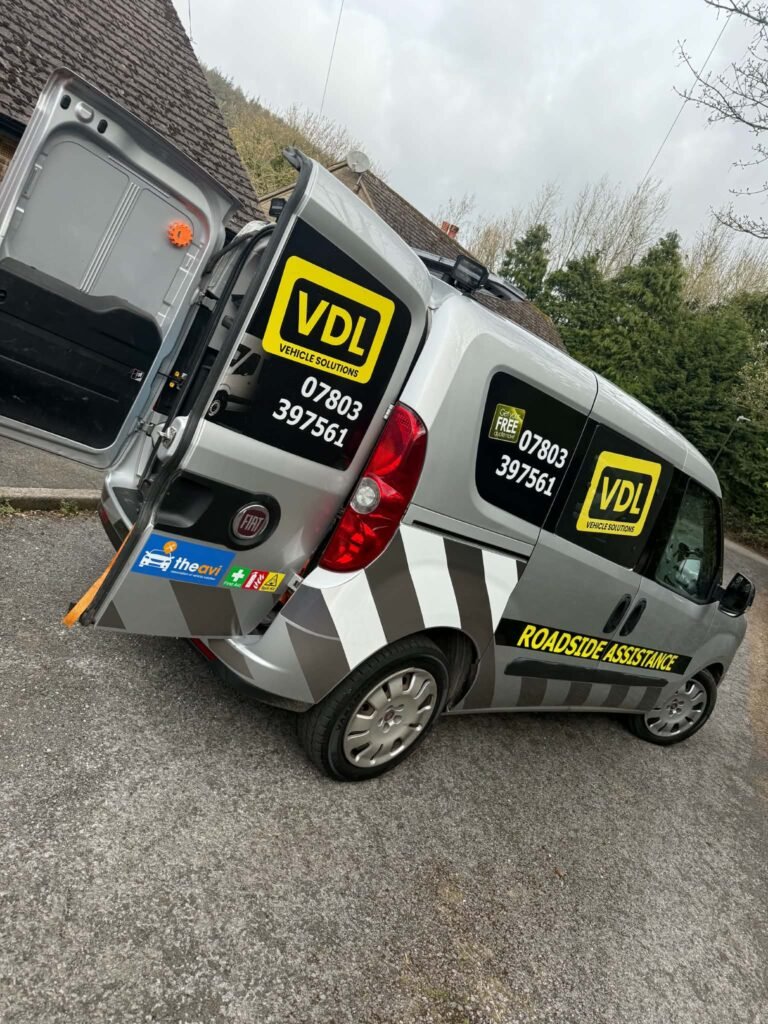
Most drivers have a rough plan for breaking down on a motorway, because it gets drilled into you. Far fewer have thought about the lanes between Buxton and Ashbourne, the climbs over the moors, or the stretch of A-road where the verge disappears and there are hedges on both sides. Those are the places where a breakdown gets genuinely dangerous, and where getting the order right makes the difference.
The order below is deliberately about safety first and the car second. The car is already broken. It will still be broken in five minutes.
1. Get Off The Carriageway If The Car Will Still Move
The single best thing that can happen is that you coast somewhere sensible before you stop. If the engine has cut out, you usually have momentum and some steering left, and that is worth spending immediately rather than stopping where you are and thinking about it.
What you are looking for, in order of preference: a lay-by, a field gateway, a farm entrance, a pub or hall car park, a wide verge, the inside of a straight. What you are trying to avoid above all is stopping on a blind bend or just over the crest of a hill, because the first driver who comes round or over will have no time at all.
If you have a choice between a slightly awkward gateway fifty yards further on and stopping on a bend now, take the gateway. Steering a dead car is heavy and the brakes lose assistance, so it takes more effort than you expect — but it is usually doable at low speed.
2. Hazards On, Straight Away
Hazard lights before anything else, before you look under the bonnet, before you get your phone out. On an unlit lane at dusk they are the only thing telling an approaching driver that a stationary object is a car and not part of the scenery. Leave the sidelights on too if it is dark or murky.
If you have a warning triangle and you are somewhere with a decent view — a straight, or a road where traffic is slow — put it out well back from the car. If you are on a bend or a fast road where standing in the carriageway to place it means walking into traffic, do not. Never put a triangle out on a motorway.
3. Decide Whether To Get Out Or Stay Put
This is the part where the standard advice gets misapplied, and it is worth thinking about properly.
On a fast road — a dual carriageway, or an A-road where traffic is doing sixty — the safest place is out of the car and behind a barrier or up the bank, on the side away from traffic, with everyone out via the doors furthest from the carriageway. A stationary car being hit from behind at speed is the scenario that kills people, and sitting in it is the worst place to be.
On a narrow lane with bends and hedges, the calculation changes, but not in the way people assume. Staying in a car parked on a blind bend is genuinely dangerous, because the impact that reaches you is the one that nobody saw coming. If the car is somewhere exposed, get out and get behind something solid — a wall, a gate, a bank — even if it means standing in a wet field for twenty minutes.
The times it is reasonable to stay in the vehicle are when you are properly off the road in a lay-by or gateway with a clear view, or when getting out would put you in more danger than staying — no verge at all, water, or a situation where you cannot safely get everyone clear. If you do stay, seatbelts on, facing forwards, doors unlocked so help can reach you.
Worth knowing: on any road where traffic is moving quickly, leave the vehicle by the passenger side and get behind a barrier. Standing in front of the car, or leaning into the engine bay from the road side, puts you in the exact spot a distracted driver will occupy.
4. Work Out Where You Are Before You Lose Signal
Signal in the valleys around here is patchy to non-existent. Down in the Goyt, parts of the Dove valley, the lanes behind Whaley Bridge and plenty of the moorland roads, you may get one bar for a few seconds and then nothing. That makes a precise location the most valuable thing you can have ready.
Build a description you can give in one go:
- The road number if it has one — A537, A54, B5470 — and which direction you were travelling.
- The nearest village either side, and roughly how far. “About a mile past Wildboarclough heading towards Congleton” is far more useful than a postcode you guessed.
- The last thing you passed — a pub, a farm sign, a bridge, a reservoir, a cattle grid, a junction. Landmarks work in a way coordinates you cannot load do not.
- What3words or a grid reference if you have any data at all and can open the app. If you can, read it out immediately, before signal drops again.
If you have no signal where the car is, walk to higher ground to make the call rather than staying by the car hoping it improves. Take your phone, keys and a coat, and if there is anyone with you, leave them somewhere safe rather than in the vehicle if the vehicle is exposed.
5. Have The Right Information Ready When You Call
If signal is marginal, a call can drop halfway through. Get the essentials out first, in this order, rather than starting with the history of the noise:
- Your location, as above.
- Your phone number, in case you get cut off.
- Make, model and registration, and roughly the age of the vehicle.
- What actually happened — cut out and will not restart, will not crank at all, overheating, warning light, flat tyre, lost drive.
- Whether you are somewhere safe, and whether there are children, older passengers or a dog in the vehicle.
- Whether the car is blocking the road.
The last two change how a job gets prioritised, so say them early. “I am half in the carriageway on a bend with two kids in the back” is a very different call from “I am in a lay-by and I am fine for a while”.
What Can Be Fixed There, And What Cannot
A fair proportion of rural breakdowns are fixable at the roadside. Flat batteries, failed alternators and charging faults, fuel and ignition problems, sensors, a coolant leak that can be traced and patched, a wheel change, electrical faults where damp has got somewhere it should not be. Those are the jobs a mobile roadside repair is genuinely better for, because fixing the car where it stands avoids the cost and time of getting it off a hill first.
Some things are honestly not roadside jobs, and it is better to say so than to spend two hours proving it. A cambelt failure, a head gasket, a clutch, a gearbox, anything that needs the car raised properly or a part that has to be ordered, and any fault that means the car is not safe to drive even once it starts. Those are recovery, then booked in with us to do properly. Overheating is the one people push their luck with — if the temperature gauge is in the red or there is steam, stop and do not restart it, because a fifteen-minute recovery wait is cheaper than a head.
What To Keep In The Car
You do not need a survival kit. Four things cover most of it: a warning triangle, a decent torch that is not your phone, a hi-vis or at least a light-coloured coat, and a power bank so a dying phone does not become the real emergency. If you drive the tops in winter, add a blanket and a bottle of water, because waiting is a bigger part of a rural breakdown than it is in town.
We cover emergency call-outs across the Peak and the surrounding lanes when available, and being told exactly where you are is what gets somebody to you quickly. Everything else can be worked out when we get there.
Broken Down Somewhere Awkward?
Ring with your location and what the car is doing, and we will tell you straight whether it is a roadside fix.
📞 Call 07803 397561 Message On WhatsApp
Leave a Reply