Antifreeze: Strength Matters More Than Level
A coolant bottle sitting between the marks tells you the system is full. It tells you nothing about whether what is in there will still be liquid at minus eight on the tops.
Coolant is the fluid nobody thinks about until something expensive happens. Oil gets changed, brakes get inspected, tyres get looked at — coolant gets glanced at through the side of a plastic bottle once a year and forgotten. And the one thing that glance cannot tell you is the only thing that matters in December.
Level and concentration are two different measurements. A system can be perfectly full of something that freezes at minus three.
Level Versus Concentration
Level is how much fluid is in the system. It should sit between the marks on the expansion tank when the engine is cold, and if it keeps dropping you have a leak that needs finding rather than a bottle you need to keep topping up.
Concentration is the ratio of antifreeze to water in that fluid. Typically you want somewhere around a 50:50 mix, which is good for protection well below anything the UK weather will produce. At 40 per cent you still have reasonable protection. By the time you are down near 25 or 30 per cent, you are protected against a mild frost and nothing more — and the car will look completely normal while that is true.
Nothing on the dashboard measures concentration. The car has no idea. It is only found by testing.
How Top-Ups Quietly Ruin It
Here is the sequence that gets most cars into trouble, and it is entirely well-intentioned.
The level drops slightly over a year, because a small weep at a hose clip or a slow loss past a pump seal is normal ageing. Somebody notices, sees the bottle is low, and tops it up with water — because water is what is to hand, and because it is only a bit. Next year the same. The year after, the same again.
Each top-up dilutes what is already in there. Three or four topping-ups with plain water across a few years, plus whatever was lost as a pressure-cap release of mostly water vapour, and a system that left the factory at 50 per cent can be down at 30 without anyone doing anything careless.
The fix is simple: top up with pre-mixed coolant of the correct type, or with concentrate diluted properly with deionised water. Never with water from the tap as a habit — once in an emergency to get home is a reasonable trade, but it needs correcting afterwards, not forgetting.
What Happens When It Freezes
Water expands as it freezes, and it does not care what is in the way. In a cooling system, the damage goes in roughly this order of cost:
- Split hoses. The cheapest outcome, and the one you want if any of it is going to happen. A hose bursts, you lose all the coolant, the car overheats the moment you drive it.
- A cracked radiator or expansion tank. Plastic end tanks split readily when ice forms inside them.
- The heater matrix. Buried in the dashboard, so the part may be modest and the labour is anything but. A leaking matrix also means coolant on the carpet and a windscreen that mists up and will not clear.
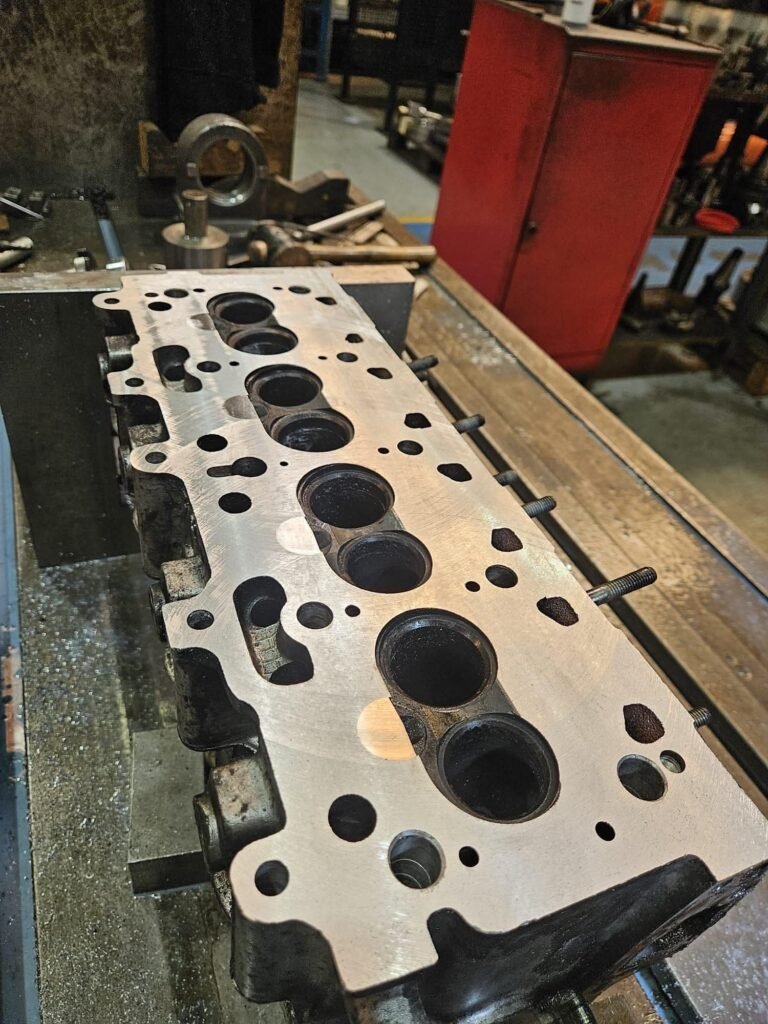
- A cracked block or head. Ice forming in the water jackets can crack cast iron and aluminium. On most cars this is the point at which the repair is worth more than the car.
Cars can also freeze solid without breaking anything and simply overheat on the way to work, because the coolant is a block of slush that will not circulate while the engine is producing heat. Either way the ending is not good.
This is not a theoretical risk at altitude. The villages above the A6, the moorland roads, anywhere that sits in a frost hollow — those places see genuinely cold nights, repeatedly, and a car parked outside all night is at ambient temperature by morning.
Testing It Takes Seconds
A refractometer is the right tool. A couple of drops of coolant on the plate, hold it up to the light, and read the freezing point off the scale directly. It is quick, it is accurate, and it works on all the common coolant chemistries as long as you read the correct scale.
The cheap floating-ball hydrometers sold in accessory shops are better than nothing but are crude, temperature-sensitive and easy to misread. If you are making a decision about whether a car is safe for winter, use a refractometer or have someone test it who has one.
We test coolant strength as part of a service and pre-winter check, because it takes moments and it is the sort of thing that only ever gets found by looking.
Worth knowing: a refractometer reads the freeze point, not the condition of the coolant. Fluid that tests strong can still be chemically exhausted — brown, cloudy, or with a sludge in the expansion tank. If it looks wrong, it needs changing regardless of what the scale says.
Antifreeze Does Three Jobs, Not One
This is the part that surprises people, and it is why coolant needs changing on cars that live somewhere mild and have never been near a frost.
It lowers the freezing point. The obvious job, and the one it is named after.
It raises the boiling point and carries heat. A properly mixed coolant under system pressure is far less likely to boil locally at a hot spot in the head, which is where damage starts.
It prevents corrosion and lubricates. This is the one that matters year-round. A modern engine has aluminium, cast iron, steel, brass, solder and rubber all sharing one fluid, and without inhibitors they corrode — and they corrode each other, galvanically, faster than they would alone. The inhibitor package also protects and lubricates the water pump seal.
Those inhibitors deplete. They get used up doing their job, and after a number of years they are simply gone. The fluid still stops freezing, so it passes the obvious test, while internally the radiator is silting up, the pump seal is wearing, the heater matrix is narrowing, and the thermostat is gumming up. That is how a car ends up with a corroded-through radiator and an overheating problem in July.
So coolant has a change interval for reasons that have nothing to do with winter, and skipping it is a slow, invisible expense.
Types, And Why Mixing Them Is A Bad Idea
Coolants are grouped by their inhibitor chemistry, and the groups are not interchangeable:
- IAT — the traditional blue or green inorganic type, short life, mostly found on older vehicles.
- OAT — organic acid technology, long life, usually red, pink or orange depending on the manufacturer.
- HOAT — a hybrid, with both organic and some inorganic inhibitors, common on a lot of European vehicles, often yellow or turquoise.
Mix an OAT with an IAT and the additive packages can react, dropping out of solution as a gel or sludge that blocks the narrow passages in a radiator and heater matrix. You end up with a system that is full, tests fine for freeze point, and does not cool properly because the passages are silting up.
Two practical rules. Colour is not a specification — different manufacturers dye different chemistries the same colours, so never choose coolant by matching the colour in the bottle. And use the specification in the handbook, or the manufacturer’s own approval, rather than a bottle labelled as suitable for everything. If you genuinely do not know what is in a system, the right answer is a flush and refill with the correct type, not a top-up and hope.
Change Intervals
Intervals vary enormously by vehicle and coolant type, from a couple of years on older IAT systems to long-life schedules measured in many years or high mileage. The handbook is the authority for your car, and it is worth actually looking rather than assuming a modern car never needs it.
Beyond the schedule, change it if: the fluid is brown, rusty or cloudy, there is sludge or oil in the expansion tank, it has been topped up repeatedly with water, the system has been opened for a repair, or nobody can tell you when it was last done. A coolant change on a system that has been neglected is one of the better-value jobs on a car, because it heads off a radiator, a pump and a matrix all at once.
And while the system is being looked at, the hoses and clips are worth ten seconds of attention each. A hose that has gone hard, soft or spongy near a clip is the one that lets go on the coldest morning of the year, which is a roadside call-out that a minute in a warm garage would have prevented.
Get The Coolant Tested Before The Frosts
We will check strength, condition and hoses at your home or workplace and tell you what actually needs doing.
📞 Call 07803 397561 Message On WhatsApp
Leave a Reply