VDL Vehicle Solutions

Category: Diagnostics & Warning Lights

What the lights on your dashboard actually mean and how faults are properly diagnosed.

  • Alternator Or Battery? Telling Which One Has Failed

    πŸ“ž 07803 397561 βœ‰οΈ info@vdlvehiclesolutions.co.uk πŸ“ Derbyshire Β· Staffordshire Β· Cheshire Emergency Call-Outs Available
    Home β€Ί Blog
    Diagnostics & Warning Lights

    Alternator Or Battery? Telling Which One Has Failed

    VDL Vehicle Solutions Β· 4 November 2026

    These two faults feel almost identical from the driver’s seat, which is why so many people buy a battery they did not need. The symptoms do separate them, if you know what to notice.
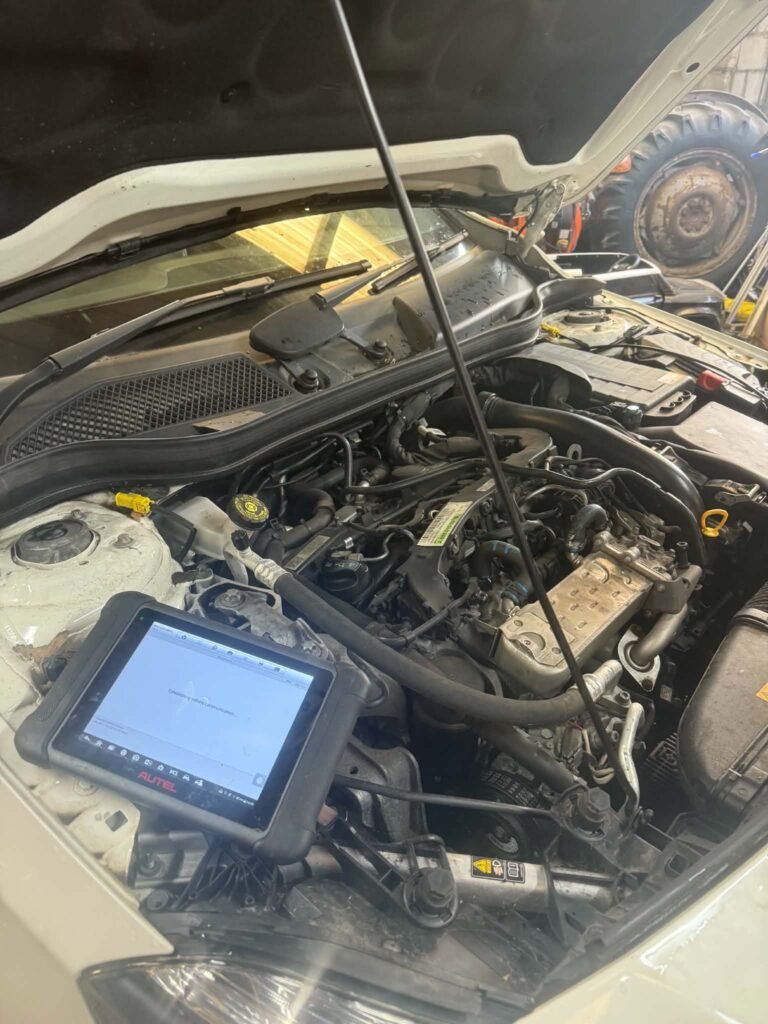
    Diagnostic scan tool connected to a vehicle

    The two components do different jobs. The battery stores enough energy to turn the engine over and to run things briefly with the engine off. The alternator makes electricity once the engine is running, powers everything the car needs, and puts back what starting took out.

    Because they work as a pair, either failing produces the same headline symptom β€” a car that will not start. Beyond that headline, they behave quite differently, and the differences are easy enough to spot that you can usually work out which one you are dealing with before anyone opens the bonnet.

    What A Failing Battery Looks Like

    A battery losing capacity fails on starting, and it fails in the cold and after standing.

    • Slow, laboured cranking, especially on the first start of a cold morning. The engine turns but sounds like it is struggling against something.
    • It starts fine at lunchtime and refuses at seven in the morning. Cold reduces what a battery can deliver and thickens the oil the engine has to turn.
    • Fine after a run, dead after standing for a few days. A weak battery self-discharges faster and has no reserve.
    • Dashboard lights dimming noticeably while cranking, then the car running perfectly once started.
    • A clicking from the starter with no crank at all, or everything on the dash resetting when you turn the key.
    • Stop-start refusing to work. Many cars disable stop-start when the battery is not healthy enough, and it is often the first sign, well before starting becomes a problem.

    The key pattern with a battery: once it is running, everything is normal. The car drives properly, nothing dims, no warning lights, no odd behaviour. All the trouble is at the point of starting.

    What A Failing Alternator Looks Like

    An alternator fails on running, and the symptoms appear while you are driving.

    • The battery warning light on with the engine running. This is the headline symptom and it is worth being clear about what it means.
    • Lights dimming at idle and brightening when you rev, or headlights pulsing with engine speed.
    • Dashboard lights coming on in odd combinations as voltage falls β€” ABS, traction control, power steering β€” because modules start complaining about supply voltage rather than about themselves.
    • The heater blower slowing down, wipers getting sluggish, the radio cutting out or resetting.
    • A whine or growl that rises with engine speed, from worn alternator bearings, or a squeal from a slipping belt.
    • A burning smell β€” hot insulation or a hot belt.
    • The car dying while being driven, which a battery fault does not do. If the alternator stops charging, the battery runs the whole car until it is flat, and then everything stops.

    How long you get between the light coming on and the car stopping depends entirely on the battery and what is switched on. It might be an hour, it might be ten minutes on a wet night with headlights, wipers and heater going. Treat it as short.

    Worth knowing: the battery-shaped warning light means the charging system is not charging. It is not a battery condition light. If it comes on while driving, the most likely causes are the alternator, its belt, or the wiring between it and the battery β€” replacing the battery will not put it out.

    The Jump Start Test

    This is the most useful roadside test there is, and it is genuinely decisive.

    Jump the car, then disconnect the leads and see what happens next.

    If it runs on happily β€” idles steadily, lights normal, no warning light β€” the alternator is working and the problem is the battery, or something that drained it, or a bad connection.

    If it dies within moments of the leads coming off, or the battery light stays on and the car soon stalls, the alternator is not producing. The car was running on the donor vehicle, not on itself.

    That single observation separates the two faults in about thirty seconds, and it is why it is worth phoning before buying parts. Two related patterns are also worth knowing: a car that will not crank at all but has bright, steady dashboard lights is often a starter or a connection rather than a battery; and a car that cranks normally and simply will not fire is not an electrical supply problem at all.

    Voltage, In General Terms

    You do not need a workshop to take a meaningful voltage reading β€” a basic multimeter across the battery terminals will do it β€” and the broad picture is easy to interpret.

    With the engine off and the car having stood for a while, a healthy fully charged battery sits a little over 12.6 volts. Around 12.4 is partly discharged. Near 12.0 it is largely flat, and something well below 12 has either been drained hard or has a failed cell.

    With the engine running, the alternator should raise the system voltage clearly above the resting figure β€” typically somewhere in the 13.5 to 14.5 volt range on most vehicles. If the running voltage is barely above the resting voltage, it is not charging. If it is well above that range, the regulator has failed the other way, which is worse, because overcharging cooks a battery and can damage electronics.

    Two caveats. Many modern cars use smart charging and deliberately vary the voltage depending on battery state, temperature and load β€” so a reading that looks low on a car with a battery sensor is not automatically a fault, and these systems need to be interpreted with data from the car rather than a meter alone. And surface charge makes a battery that has just been driven read higher than it really is, so a resting reading means resting, not two minutes after switching off.

    Why New Batteries Get Wasted

    The common story: car will not start, a battery gets fitted, it is fine for a fortnight, and then it is flat again. Now there are two batteries and the original fault is still there.

    The reasons a battery keeps going flat when the battery is not the problem:

    1. The alternator is not charging properly. Sometimes not at all, sometimes charging weakly enough that short journeys never keep up.
    2. A parasitic drain. Something drawing current with the car locked β€” a module not going to sleep, a boot or glovebox light, an aftermarket alarm, a tracker or dashcam wired to a permanent live without a cutoff, a failing relay. These are found by measuring current draw over time, not by guessing.
    3. Bad connections. A corroded terminal, a loose clamp, or a poor earth strap between engine and body will mimic both faults. It is the first thing worth checking and costs nothing.
    4. Use pattern. Short journeys in winter, with heated screens and seats, can take more out of a battery than a few miles puts back. Nothing is broken; the car is being used in a way that keeps it undercharged.
    5. The wrong battery, or one not registered. Many cars with stop-start need an AGM or EFB battery, and many need the new battery coded to the car so the charging strategy suits it. Fit a standard battery, or fit the right one without registering it, and it will be charged incorrectly and die early.

    That last point catches a lot of people out on cars from the last decade or so, and it is not optional on the vehicles that require it.

    Testing It Properly

    Doing this properly means testing the system, not swapping parts. In practice that is: a load or conductance test on the battery to see what capacity is actually left; a charging test with the engine running and then with a realistic load applied, because some alternators cope at idle and fall over with lights and blower on; a voltage-drop check across the main cables and earths; a parasitic drain measurement if the complaint is going flat while parked; and reading the car’s own data on battery state and charging strategy where it has a sensor.

    All of that can be done where the vehicle is standing, which is why it suits a mobile diagnostic and roadside visit β€” you get an answer before any parts are bought. If the outcome is an alternator, that is usually a job we can do on site too, and if a car needs more than that it gets booked in with us.

    The cost of testing first is small. The cost of guessing is a battery you did not need and an alternator you still have to pay for.

    Not Sure Which One It Is?

    We will test the battery and the charging system on site and tell you what actually needs replacing.

    πŸ“ž Call 07803 397561 Message On WhatsApp
  • DPF Light On? Short Journeys Are Usually Why

    πŸ“ž 07803 397561 βœ‰οΈ info@vdlvehiclesolutions.co.uk πŸ“ Derbyshire Β· Staffordshire Β· Cheshire Emergency Call-Outs Available
    Home β€Ί Blog
    Diagnostics & Warning Lights

    DPF Light On? Short Journeys Are Usually Why

    VDL Vehicle Solutions Β· 28 October 2026

    A DPF light is rarely a broken part. It is usually a diesel being used in a way that never lets it clean itself β€” and how you respond in the first few days decides whether this is a cheap problem or an expensive one.

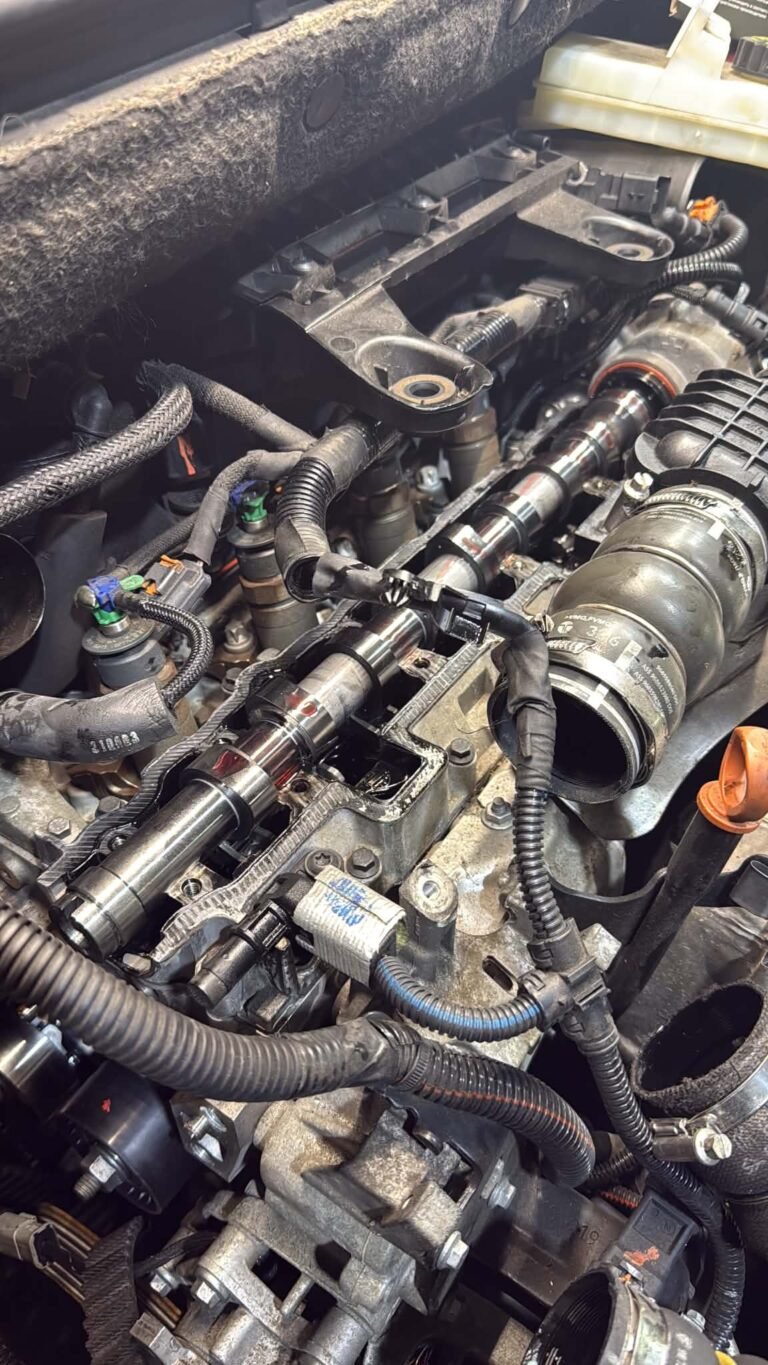
    Diesel engine bay stripped down for injector work

    The diesel particulate filter sits in the exhaust and traps the soot a diesel engine produces. That is all it does. It is a ceramic honeycomb with channels blocked at alternate ends, so exhaust gas has to pass through the walls and the soot stays behind. It works extremely well, which is exactly the problem β€” anything that traps soot eventually fills with soot, and it has to be emptied somehow.

    The way it empties is by getting hot enough to burn the soot off into ash and gas. That process is called regeneration, and everything that goes wrong with a DPF comes back to regeneration not happening often enough.

    Passive And Active Regeneration

    Passive regeneration happens on its own, with no input from the engine management, when the exhaust is running hot for a sustained period. Steady motorway or dual-carriageway driving does it. You never know it has happened, and it is the ideal way for a DPF to stay clean.

    Active regeneration is the fallback. When the car works out the filter is filling β€” usually by measuring the pressure difference across it and by counting the soot it thinks it has produced β€” it deliberately raises the exhaust temperature. It does this by injecting extra fuel late in the cycle, adjusting timing, and often by closing off the intake slightly. The exhaust gets very hot and the soot burns off.

    An active regen needs several things to be true at once: the engine at proper operating temperature, a reasonable amount of fuel in the tank, a steady load, and β€” crucially β€” enough time. It is not a two-minute process. If you switch off partway through, the cycle is abandoned and has to start again from the beginning next time.

    Why A School-Run Life Never Gets There

    Consider a typical week: two miles to school, a mile to the shop, four miles to work, the same back. Every journey is short, the engine may barely reach full temperature before it is switched off, and the exhaust never sees the sustained heat passive regeneration needs.

    Worse, the car keeps trying to run active regens and keeps being interrupted. Each abandoned attempt dumps extra fuel into the engine, some of which finds its way past the rings into the sump. That is why cars used like this often show a rising oil level, and why the oil ends up diluted with diesel β€” which is not doing the engine any favours either.

    So the filter fills, the attempts to clear it fail, and eventually the car tells you about it.

    What The Light Actually Means, Stage By Stage

    DPF warnings are not one message. Roughly, and the exact behaviour varies by manufacturer:

    1. DPF light on, nothing else. The filter is loaded but within range, and the car is asking for a proper drive so it can complete a regen. This is the cheap stage. Act now.
    2. DPF light plus reduced power, or the light flashing. The filter is heavily loaded and the car has restricted output to protect itself. A drive may still clear it, but you are closer to the edge.
    3. Engine management light joins in, limp mode, will not rev past a certain point. The car has given up on self-clearing and has logged faults. This now needs equipment, not a drive.
    4. Warnings about oil level or oil dilution. Repeated failed regens have put diesel in the sump. This needs an oil and filter change as well as the DPF sorting.

    People routinely drive around at stage one for months because the car still goes. That is how a problem that a forty-minute drive would have fixed becomes a filter that has to come off.

    The Long Drive Fix, And When It Is Too Late

    At stage one, the fix genuinely is a decent drive. What that means in practice: get the engine fully warm first, then find a dual carriageway or a fast A-road and hold a steady speed in a gear that keeps the revs up β€” somewhere around 2,000 to 2,500rpm is the usual advice β€” for a good twenty to forty minutes without stopping. Do not sit in traffic, do not do it in top gear at 40mph, and do not switch off as soon as you get home if it feels like something is happening.

    You can often tell a regen is running: a hot, slightly acrid smell, the cooling fan running hard when you stop, a change in idle, sometimes a faint whistle. If the light goes out, it worked.

    It is too late for the drive-it fix when the car is in limp mode, when the light is flashing and power is well down, or when it has gone through several cycles of clearing and coming straight back. At that point the filter is loaded beyond the level at which the car will risk an active regen, because burning off that much soot at once can crack the ceramic. Sensibly, it refuses.

    Worth knowing: soot burns off in a regen, but ash does not. Ash is the leftover from burnt soot and from oil additives, and it accumulates for the life of the filter. That is why a high-mileage DPF can be permanently blocked even though it has been regenerated faithfully β€” and why a filter that fills again within a few hundred miles of a successful regen is telling you it is full of ash, not soot.

    Forced Regeneration

    A forced regen is a regeneration commanded through the diagnostic socket rather than initiated by the car. It bypasses the conditions the car would normally insist on and runs the cycle under controlled conditions while the vehicle is stationary, with the engine held at a set speed and the exhaust temperature monitored.

    It is a proper job rather than a button press. The soot load has to be read first, because forcing a regen on a filter that is too far gone can damage it. Related faults need checking at the same time β€” a leaking injector, a faulty differential pressure sensor, a split in the exhaust ahead of the filter, a stuck EGR valve or a glow plug fault will all stop regens working, and clearing the filter without fixing the cause just resets the clock. If the oil is diesel-diluted it should be changed as part of the work.

    We can run a forced regeneration and full diagnostic check at your home or workplace, which is usually more convenient than leaving a car somewhere for a day. If the filter turns out to be ash-loaded rather than soot-loaded, no amount of forcing will help and the honest answer is cleaning off the vehicle or replacement β€” that gets booked in with us rather than done on a driveway.

    Why Removal Is Not An Option

    Removing or gutting a DPF, or fitting a delete map, comes up constantly because it appears to solve the problem cheaply. It does not, for reasons that have nothing to do with opinion:

    • A vehicle first fitted with a DPF cannot pass an MOT with it missing β€” testers check for it visually, and a removed filter is a failure.
    • Driving a vehicle whose emissions control has been defeated puts you on the wrong side of the rules on using a vehicle in a modified condition, and insurers treat an undeclared emissions modification as exactly that.
    • Resale becomes somebody else’s problem to discover, which is a poor position to be in.

    The specifics of the rules do change, so check the current position rather than relying on what was true a few years ago β€” but the direction of travel has only ever been one way, towards more scrutiny rather than less.

    Is A Diesel Just The Wrong Car For You?

    This is worth saying plainly, because it is the actual answer for a lot of people. If your annual mileage is low and almost all of it is short, cold, stop-start journeys, a modern diesel is working against its design every single day. You will keep having DPF problems, you will get diesel in the oil, and you will spend money at intervals on a fault that is really just a mismatch between the car and the use.

    If your driving includes regular longer runs β€” a commute of fifteen miles or more, motorway work, towing, or the sort of mileage that comes with living out in the villages and driving into Stockport or Stoke β€” a diesel is fine and the DPF will look after itself.

    The middle ground is to keep the diesel and change the habit: once a fortnight, take it for a proper run and let it get hot. That is not a fudge, it is genuinely what the filter needs.

    DPF Light Not Going Out?

    We will read the soot load, check what is stopping regens, and tell you whether a forced regen will fix it.

    πŸ“ž Call 07803 397561 Message On WhatsApp
  • The Engine Management Light: What It Actually Means

    πŸ“ž 07803 397561 βœ‰οΈ info@vdlvehiclesolutions.co.uk πŸ“ Derbyshire Β· Staffordshire Β· Cheshire Emergency Call-Outs Available
    Home β€Ί Blog
    Diagnostics & Warning Lights

    The Engine Management Light: What It Actually Means

    VDL Vehicle Solutions Β· 5 October 2026

    Nobody is pleased to see it, and most people are told either to ignore it or to panic. Neither is right. Here is what the light is telling you, and what it is not.

    Diagnostic scan tool plugged into a car to read engine management fault codes

    Steady Or Flashing Changes Everything

    The first thing to look at is not the code, it is the behaviour of the lamp itself.

    A steady light means the engine management system has logged a fault and wants it looked at. The car is usually drivable. Drive it gently, notice whether it feels any different, and get it read sooner rather than later β€” a small fault left alone tends to turn into a bigger one, and some faults quietly ruin fuel economy for months.

    A flashing light is a different message. On most cars that means a misfire serious enough that unburnt fuel is going down the exhaust. That fuel burns in the catalytic converter instead of in the cylinder, and a cat is not built for it β€” it can be cooked in a matter of miles. A flashing light means stop driving, not “carry on and book it in”.

    Worth knowing: if the light starts flashing, ease off, get somewhere safe and switch the engine off. Continuing on a heavy misfire can turn a coil pack or an injector into a coil pack, an injector and a catalytic converter, and the cat is by far the most expensive part of that list.

    You may also find the car drops into a reduced-power limp mode. That is the ECU protecting the engine rather than another fault on top β€” it is deliberately limiting what you can do until the problem is dealt with.

    The Light Is A Symptom, Not A Diagnosis

    The engine management system spends its whole life watching sensors and comparing what they report against what it expects. When a reading sits outside the expected range for long enough, or a self-test fails, it stores a fault code and lights the lamp.

    So the light means exactly this: something is not behaving the way I expect it to. It does not say which component is broken. It does not even promise that a component is broken β€” plenty of codes are set by a split hose, a chafed wire or a corroded connector while every part named in the code is fine.

    A Code Reader Gives You A Code, Not An Answer

    Cheap readers and phone dongles are genuinely useful for knowing whether anything is stored and roughly which area it sits in. What they cannot do is tell you the cause, and this is where most money gets wasted.

    Take a common one: a code for the mixture running lean on bank one. Read literally, that sounds like an oxygen sensor. In practice the sensor is usually working perfectly and reporting the truth β€” the engine really is running lean. The cause might be an air leak after the airflow meter, a leaking intake gasket, weak fuel pressure, a dirty airflow sensor, a tired injector, or an exhaust leak upstream of the sensor drawing air in. Replacing the sensor changes nothing except your bank balance.

    The pattern is nearly always the same: the code names the observation, and the part mentioned in the code is the messenger. Parts fitted on the strength of a code alone are the reason so many cars arrive with a history of three replaced sensors and the same light still on.

    What Proper Diagnosis Looks Like

    Reading the codes is step one of about six. The work that actually finds the cause is:

    • Freeze frame data β€” the snapshot of conditions at the moment the fault was stored. Engine speed, load, temperature, road speed. It tells you whether this happens cold, hot, on load or at idle.
    • Live data β€” watching sensors work while the engine runs, and seeing whether their readings make sense against each other rather than just being inside a tolerance band.
    • Fuel trims β€” how far the ECU is having to correct the mixture, and whether that correction changes with engine speed. That single reading separates an air leak from a fuelling problem.
    • Actuator tests β€” commanding a valve, a pump or an injector directly to see whether it responds.
    • Physical testing β€” a smoke test for air leaks, pressure and voltage checks, back-probing connectors, and a scope on a sensor signal where the numbers alone are not enough.

    Done that way, the fault gets found once and fixed once. It is unglamorous work and it takes time, but it costs far less than fitting parts in hope. All of it is part of our servicing and repair work and most of it can be done wherever the vehicle is standing.

    What Sets It Off Most Often

    Across the cars we see, the light is most commonly down to one of these:

    • Oxygen or lambda sensors β€” sometimes genuinely faulty, often reporting a real problem elsewhere
    • Airflow sensors, either contaminated or reading out of range
    • EGR valves sticking, clogging or being commanded and not moving
    • Coil packs, plugs and injectors causing misfires
    • Unmetered air getting in through split hoses, perished gaskets or a loose clip
    • Thermostats and coolant temperature sensors, which throw the whole fuelling strategy off
    • On diesels, DPF regeneration problems, glow plugs and turbo control faults
    • Evaporative emissions faults β€” sometimes as trivial as a fuel cap not sealing
    • Wiring and connectors, particularly anywhere exposed to road spray and salt

    Why Clearing It Without Fixing It Is Pointless

    Clearing the code makes the lamp go out. It does not fix anything, the light comes back as soon as the ECU sees the fault again, and it destroys the freeze frame data that would have helped find the cause. If you clear codes before having the car looked at, you have thrown away the most useful evidence you had.

    There is an MOT angle too. The tester checks the warning lights, and an illuminated engine management light counts against the car β€” it is not something you can talk your way past on the day. Clearing it in the car park is also a poor plan, because on many vehicles the emissions self-tests need a period of driving to complete afterwards, and an incomplete set of monitors is itself a problem. MOT rules are updated from time to time, so check the current requirements if you want the detail, but the practical point stands: the light needs fixing, not hiding, before the test.

    It Is Not Always Expensive

    Worth saying plainly, because the light causes a lot of unnecessary dread. A good share of engine management faults turn out to be a hose, a connector, a sensor or a cap β€” cheap parts, modest labour. What makes them expensive is leaving them. A misfire ignored takes the catalytic converter with it, a cooling fault ignored damages far more than a thermostat, and a small air leak ignored slowly wrecks your fuel economy while you pay for it at every fill-up.

    Light On? Get It Read Properly

    We diagnose engine management faults at your home or workplace, with live data rather than guesswork.

    πŸ“ž Call 07803 397561 Message On WhatsApp